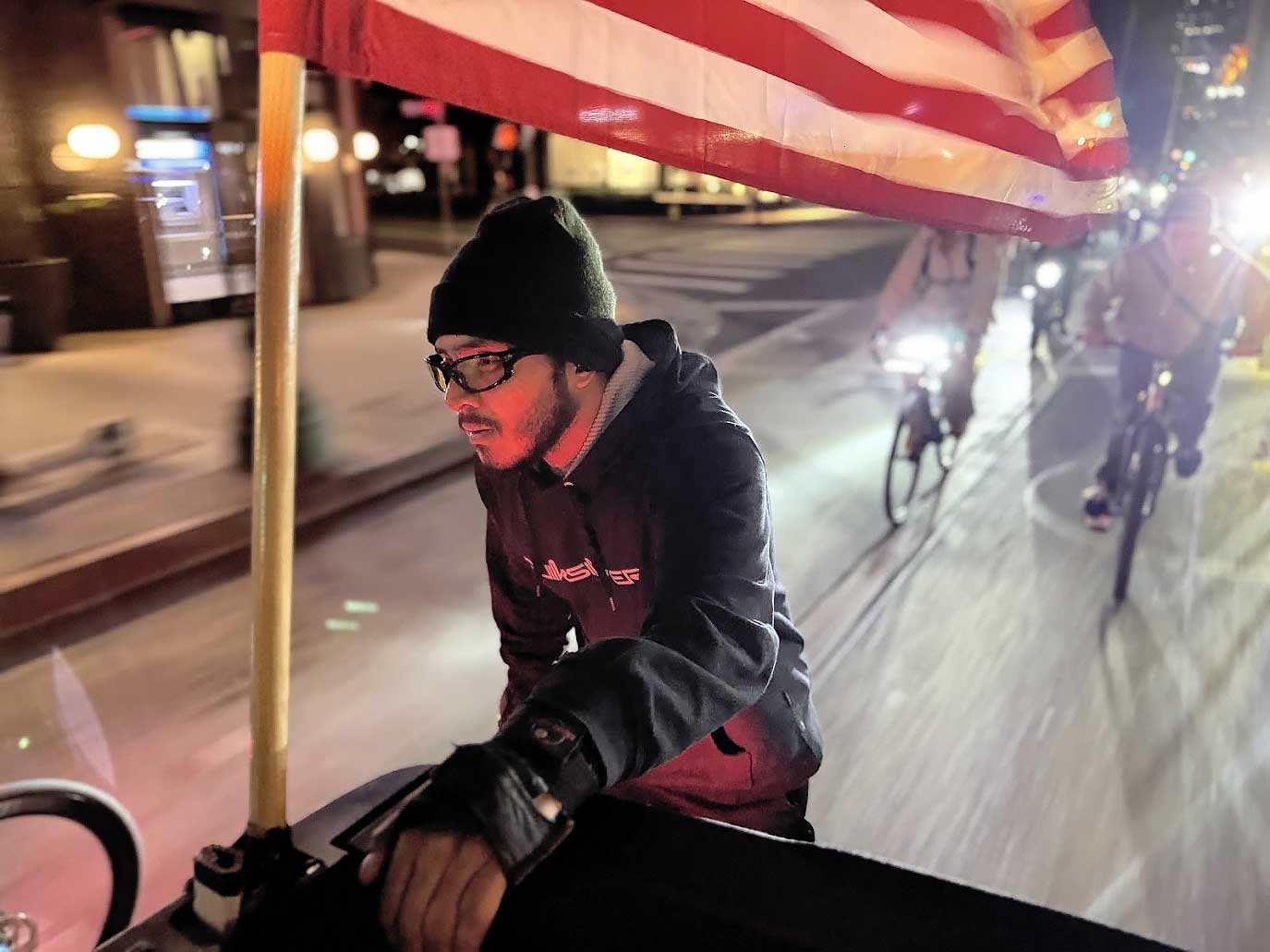
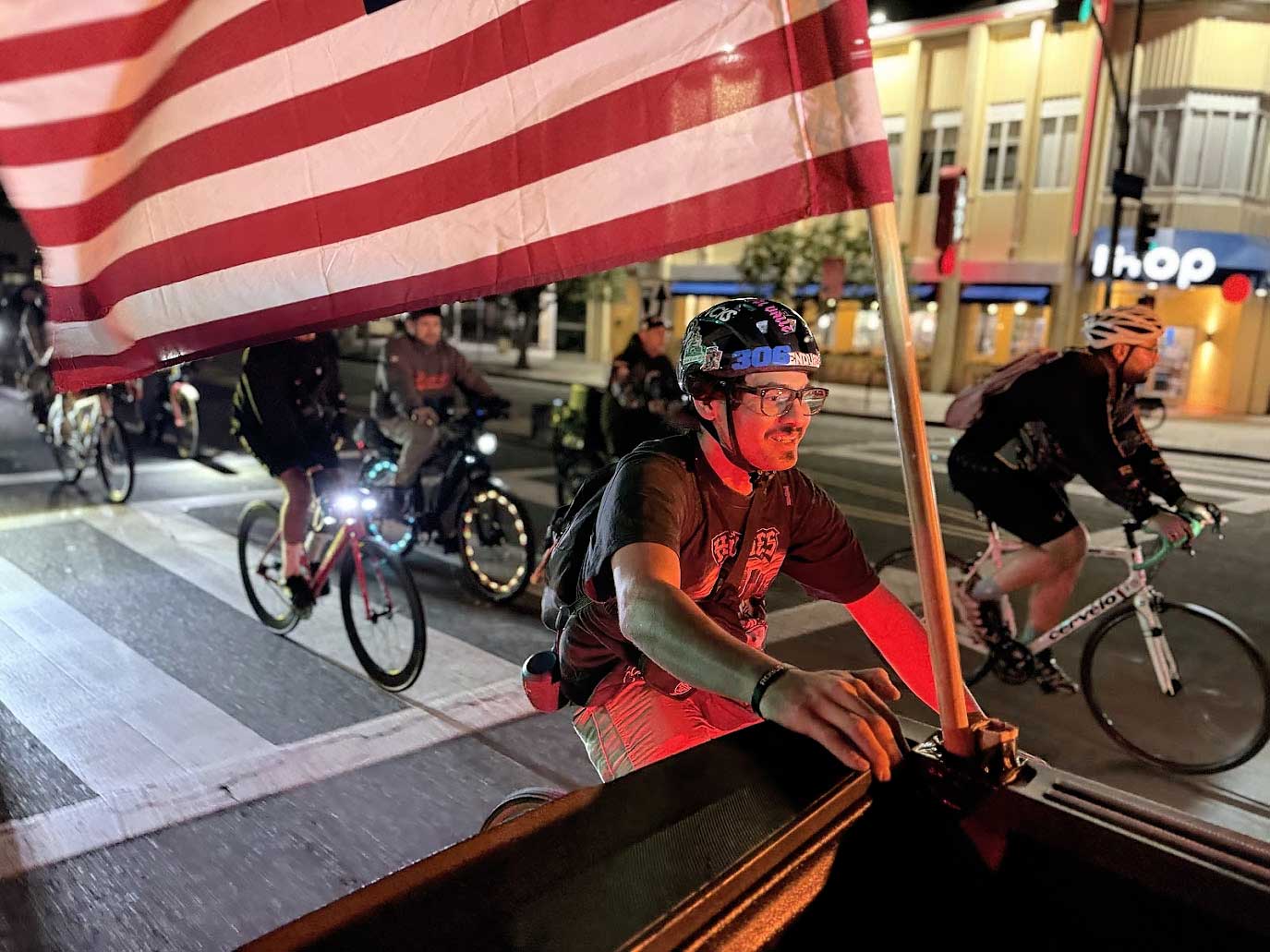
Los Angeles started the year with a roar—not from engines, but from thousands of cyclists filling the streets for the first LA Critical Mass ride of 2026.
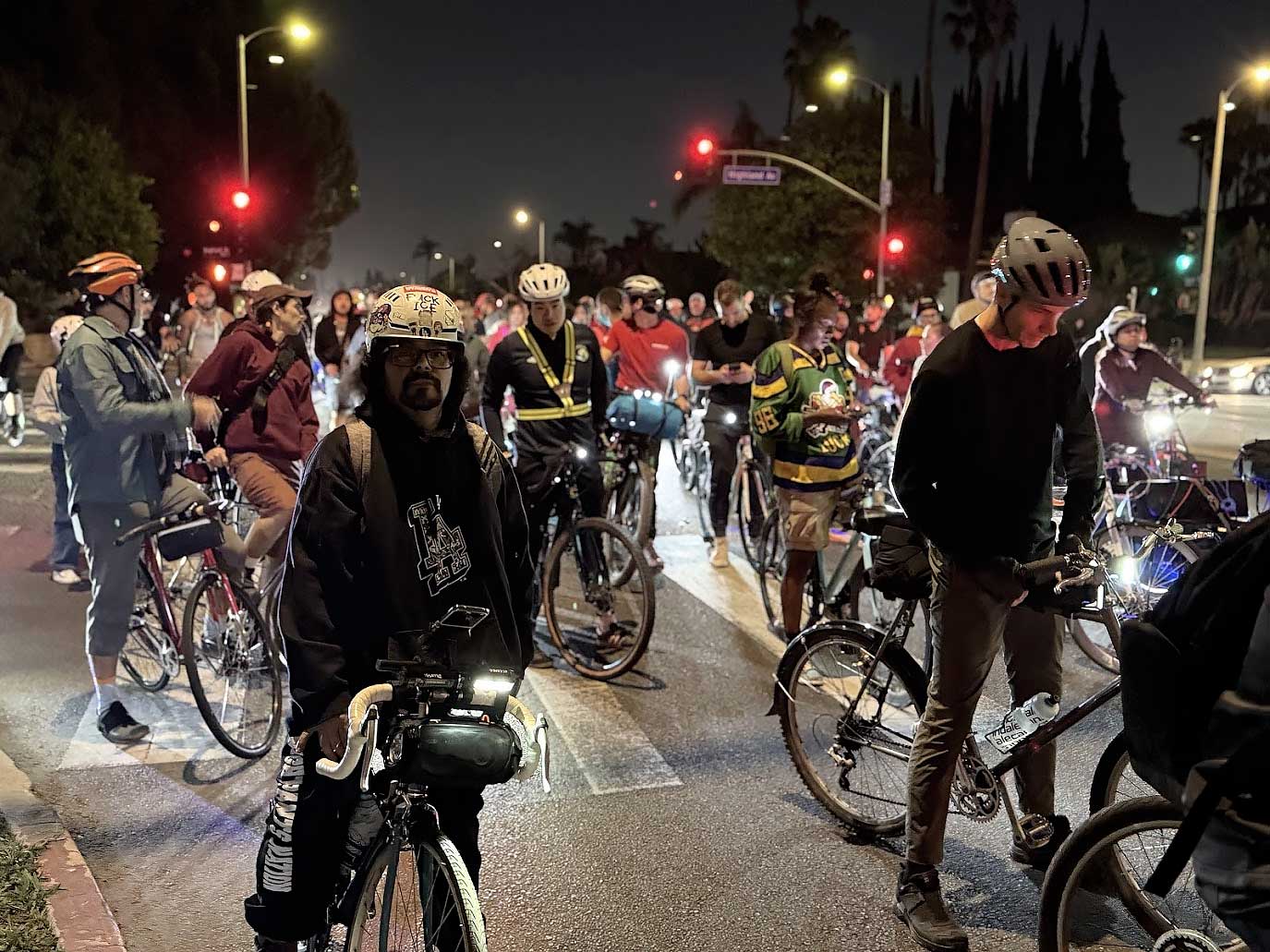
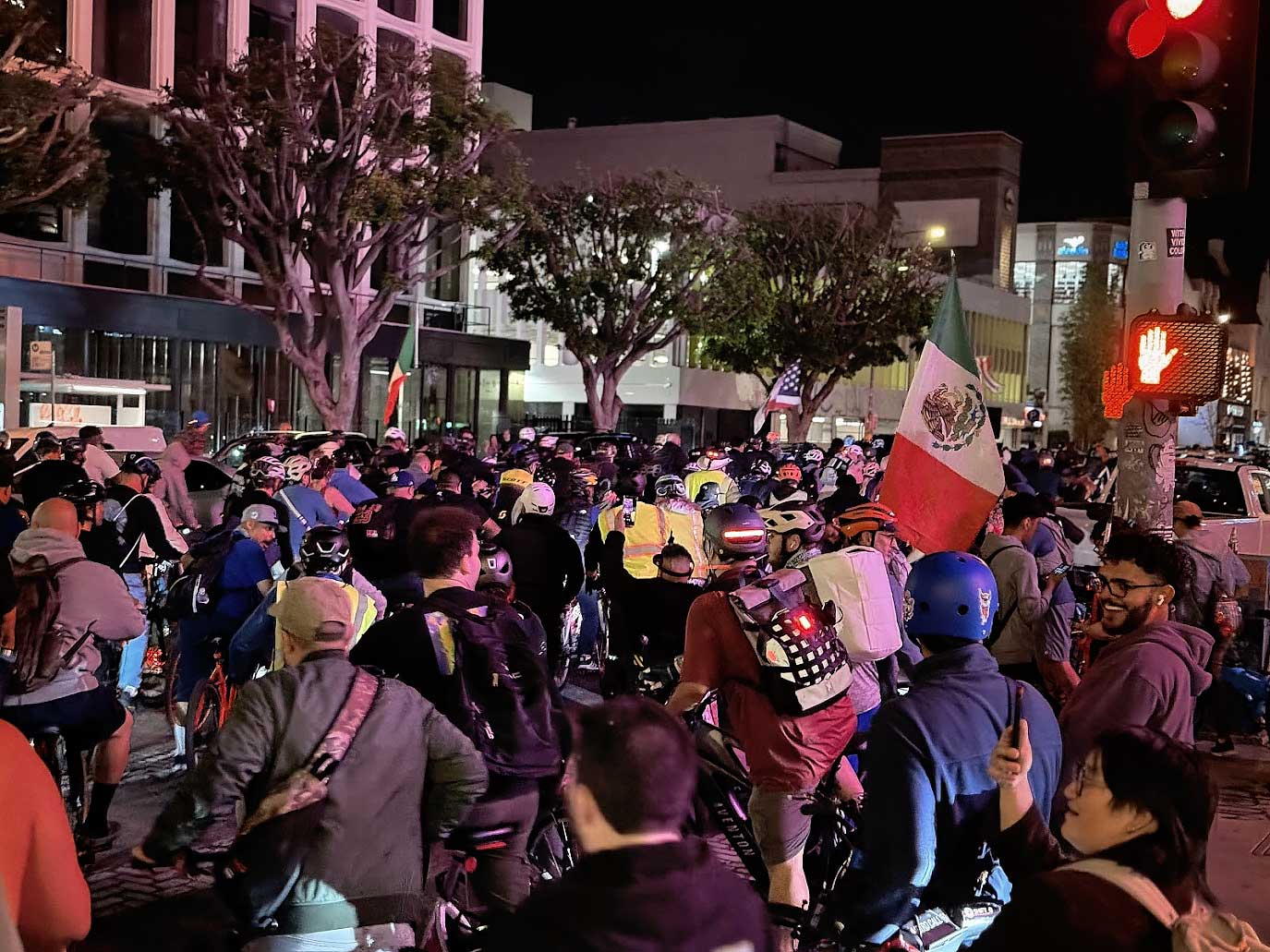
Under perfect winter skies, riders began gathering at 6:30 PM, filling Wilshire and Western with lights, laughter, and the unmistakable energy that only Critical Mass can generate.
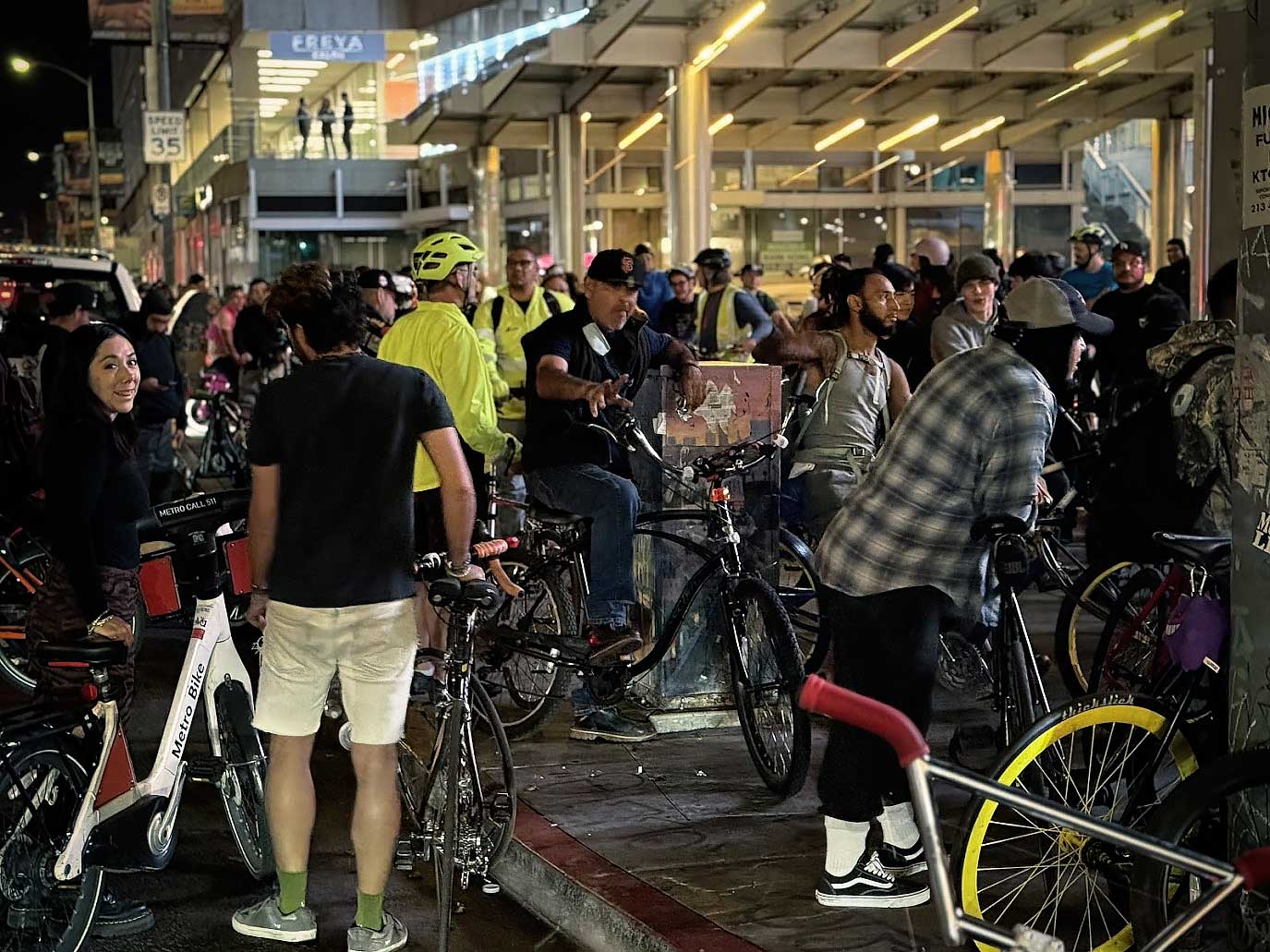
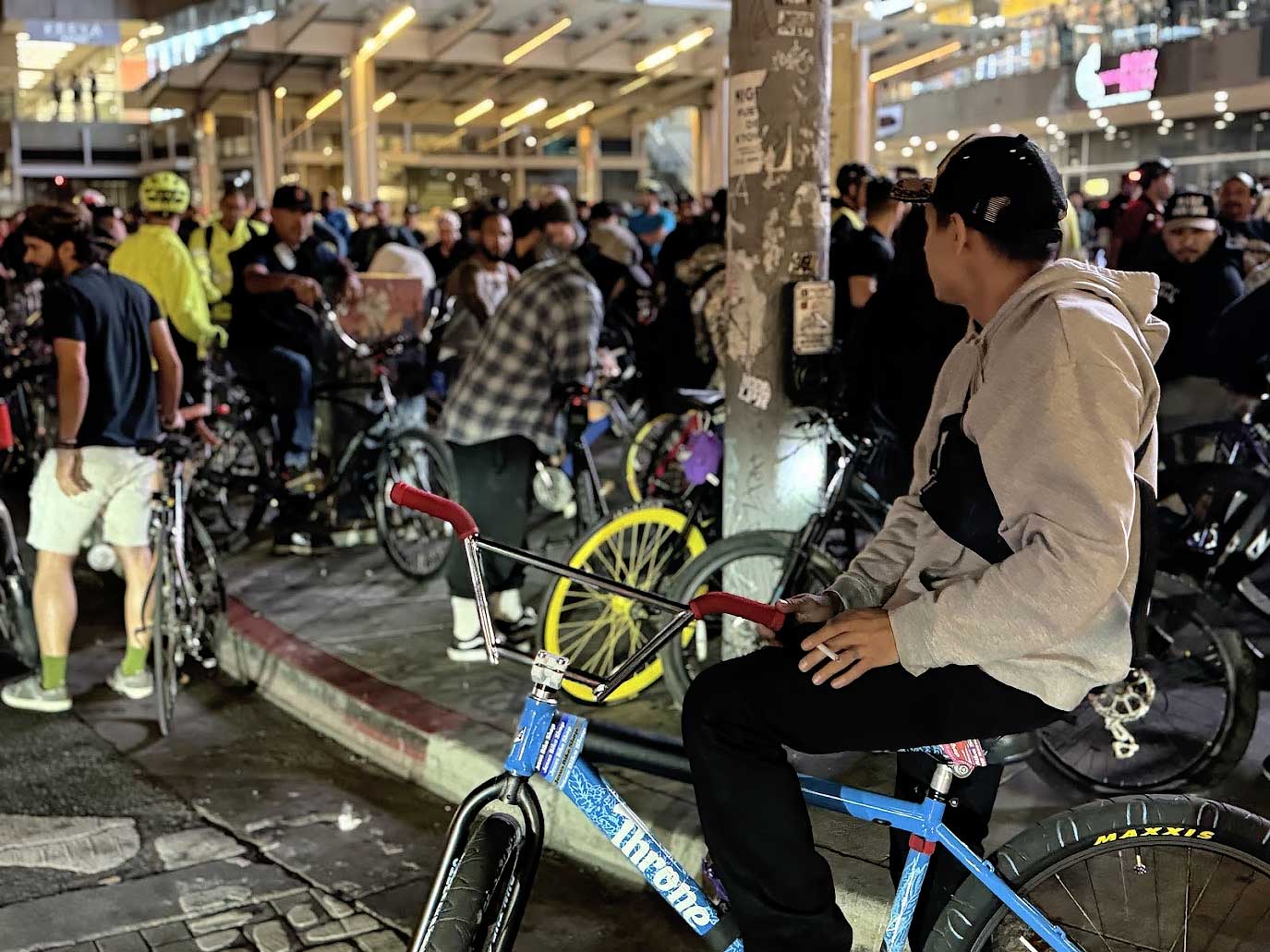
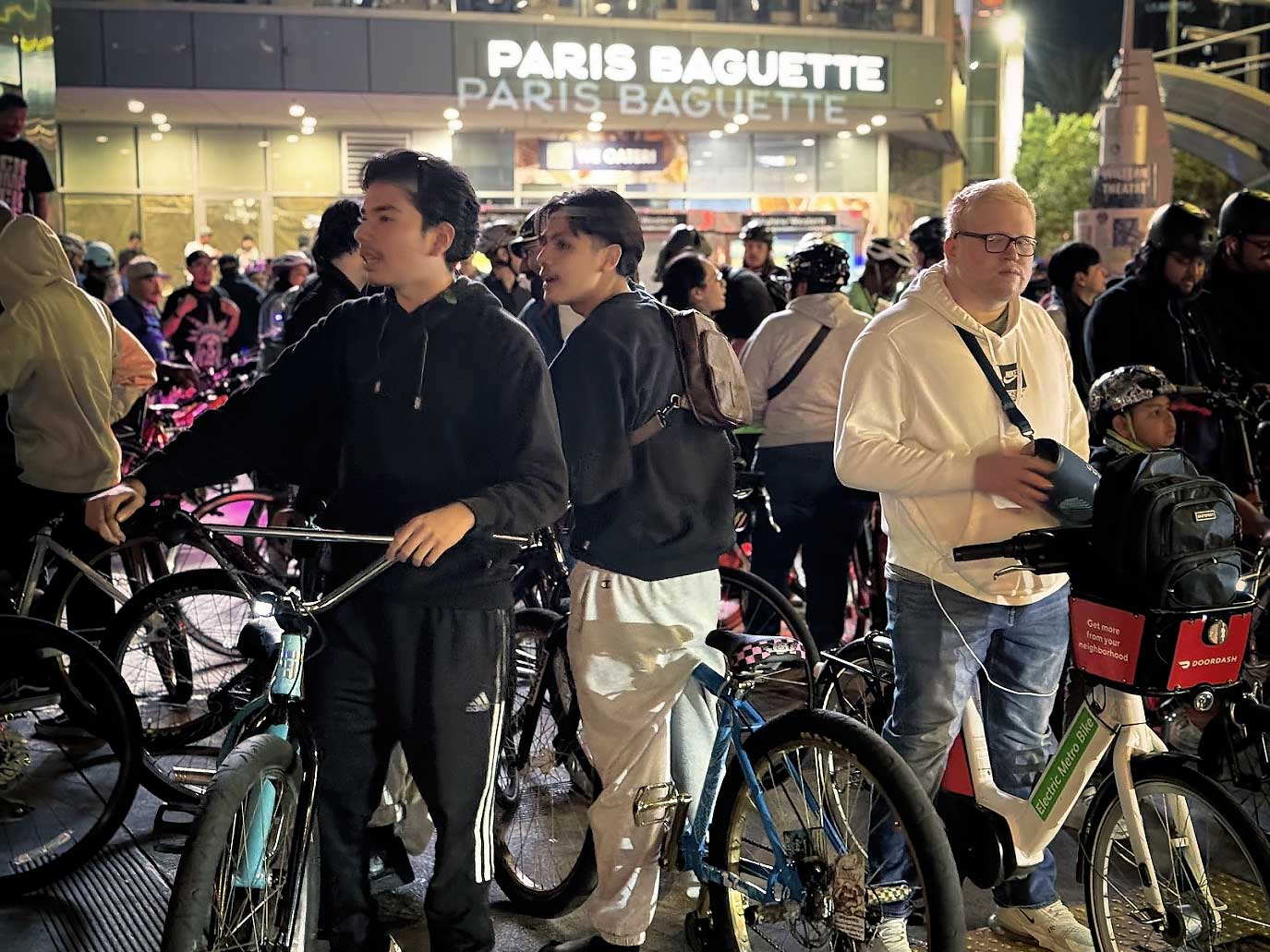
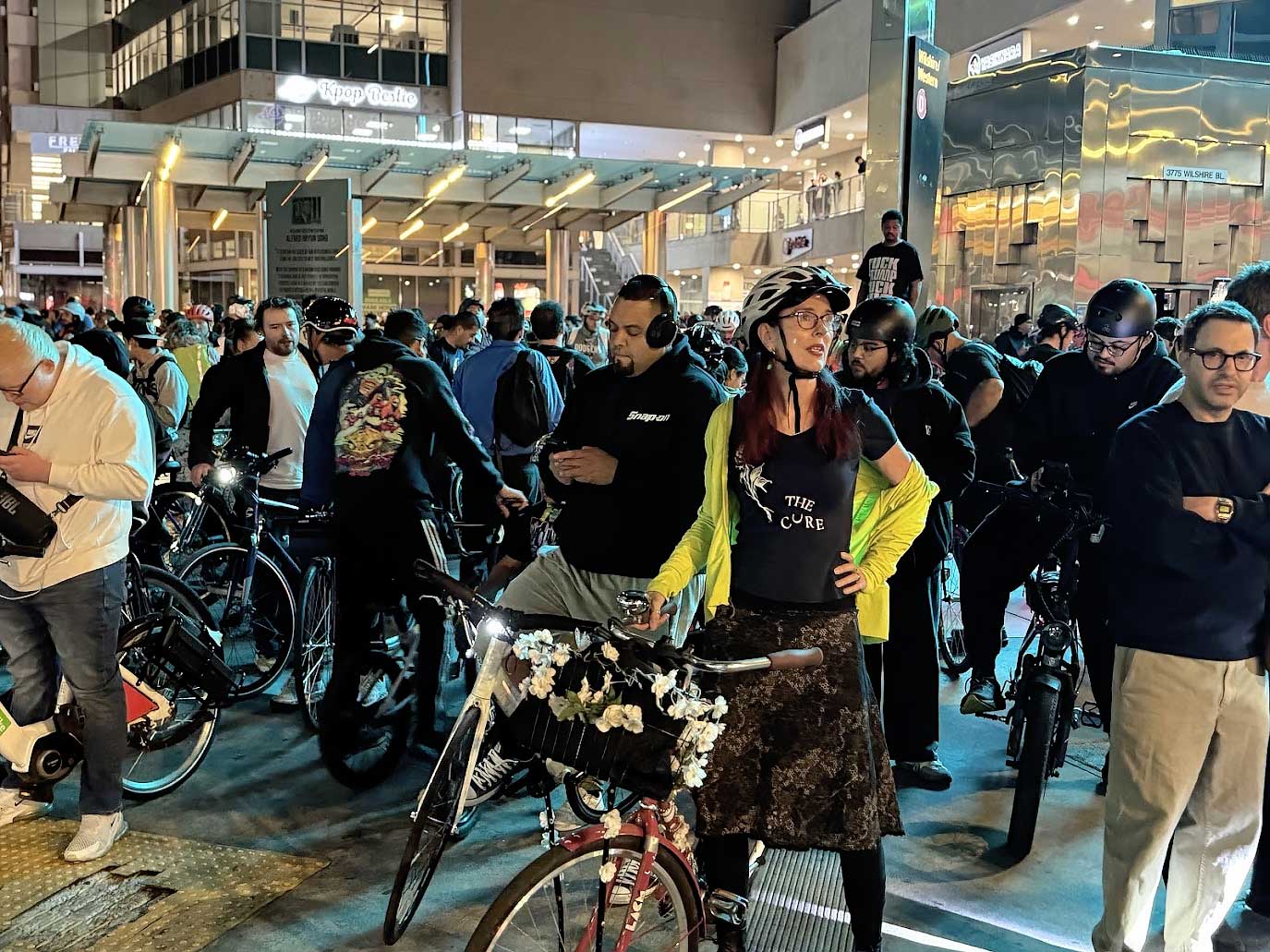
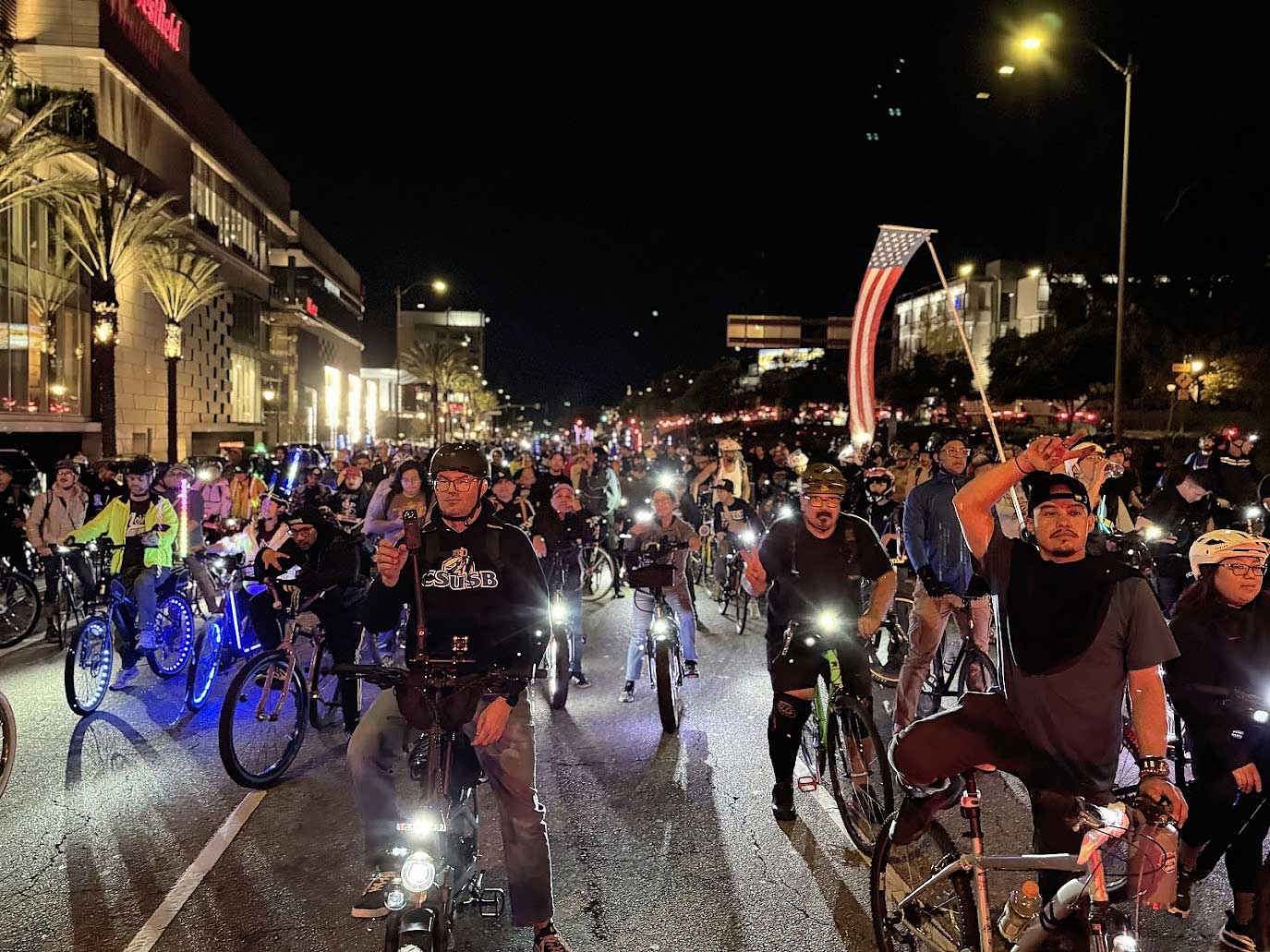
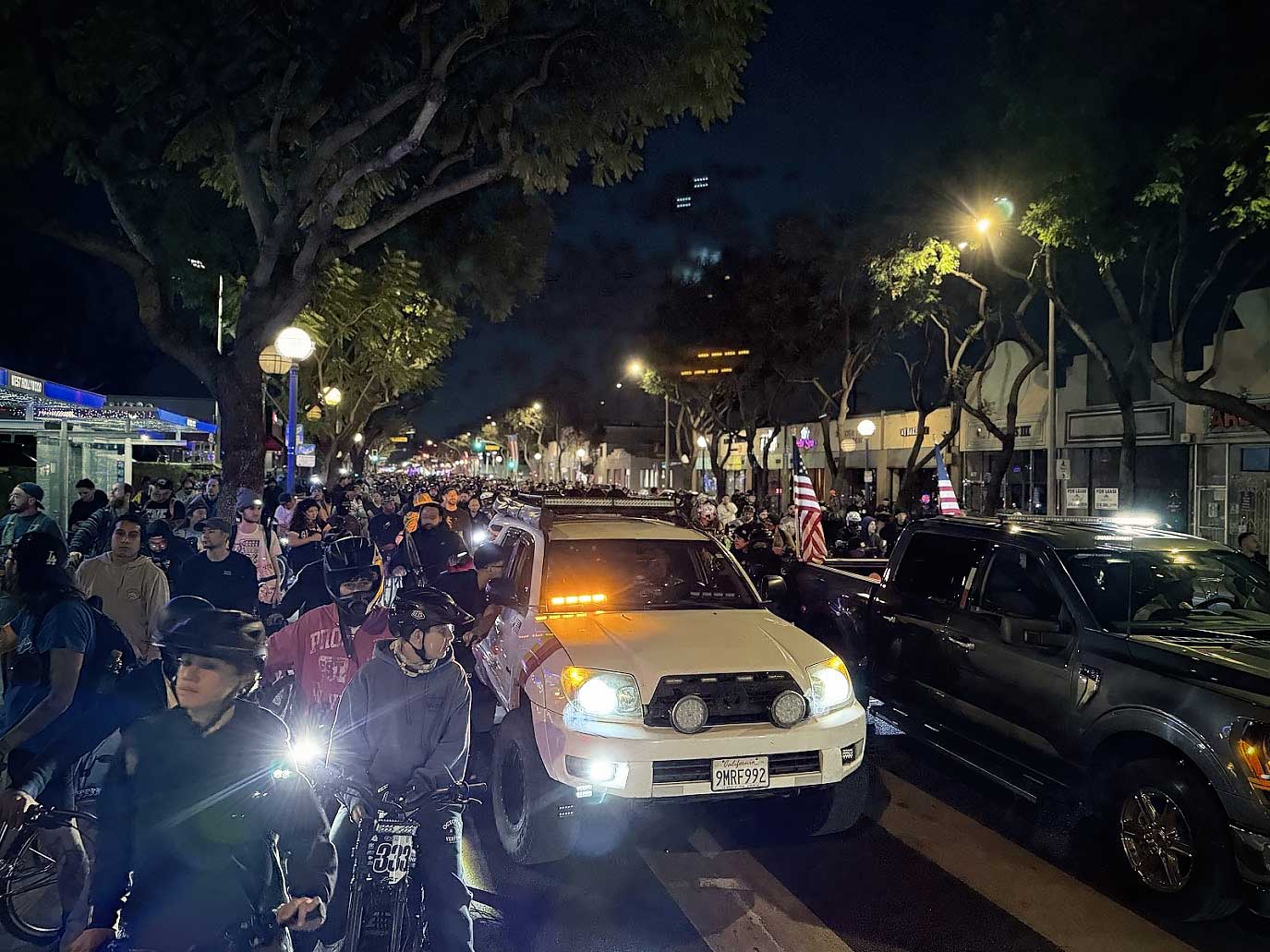
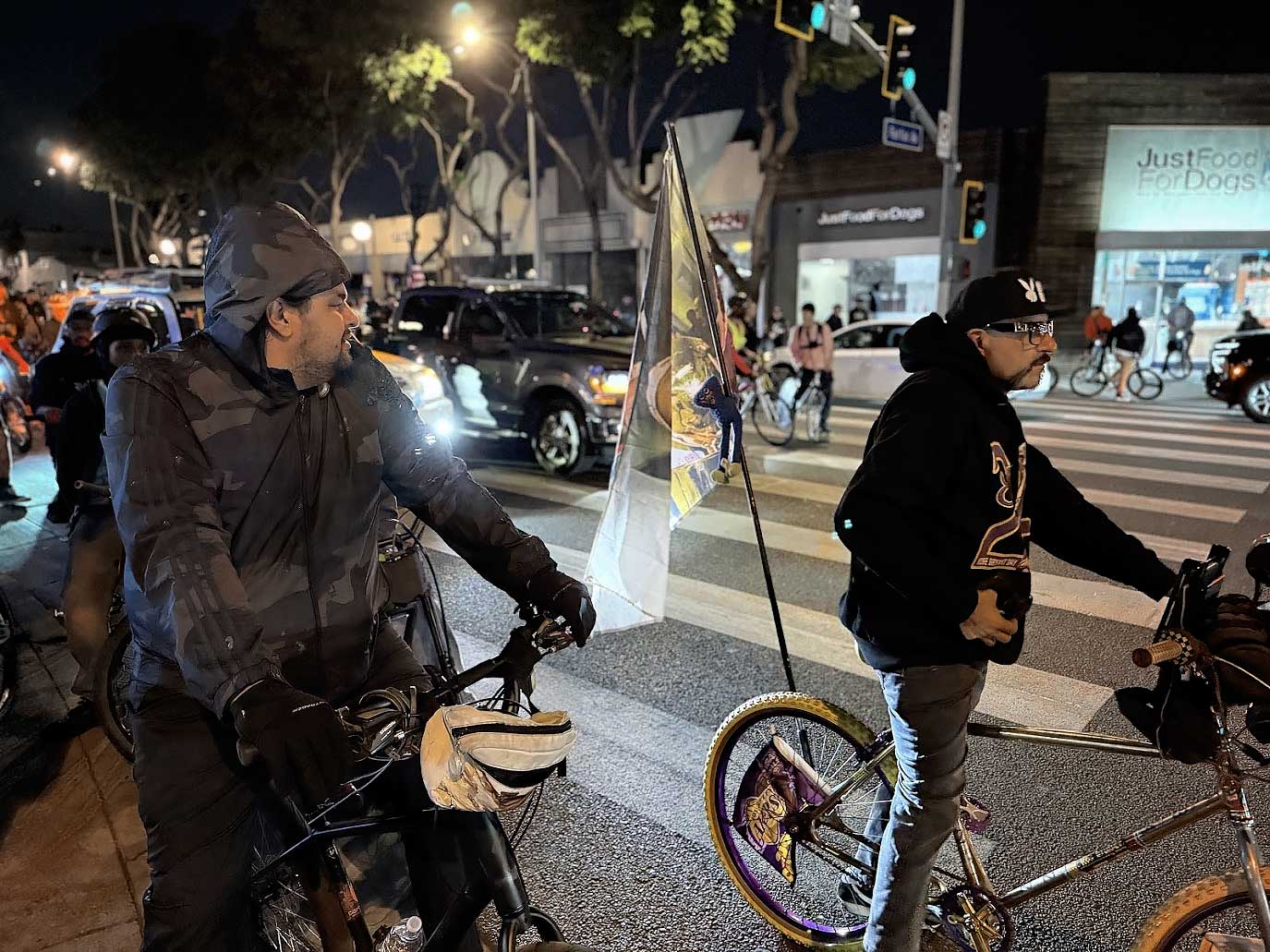
By 7:29 PM, the crowd had swelled into the thousands. What began as a steady stream of early arrivals became a tidal wave of riders stretching down the boulevard. For many, this was more than a ride—it was a reunion, a tradition, and a statement of presence in a city that often forgets its cyclists.
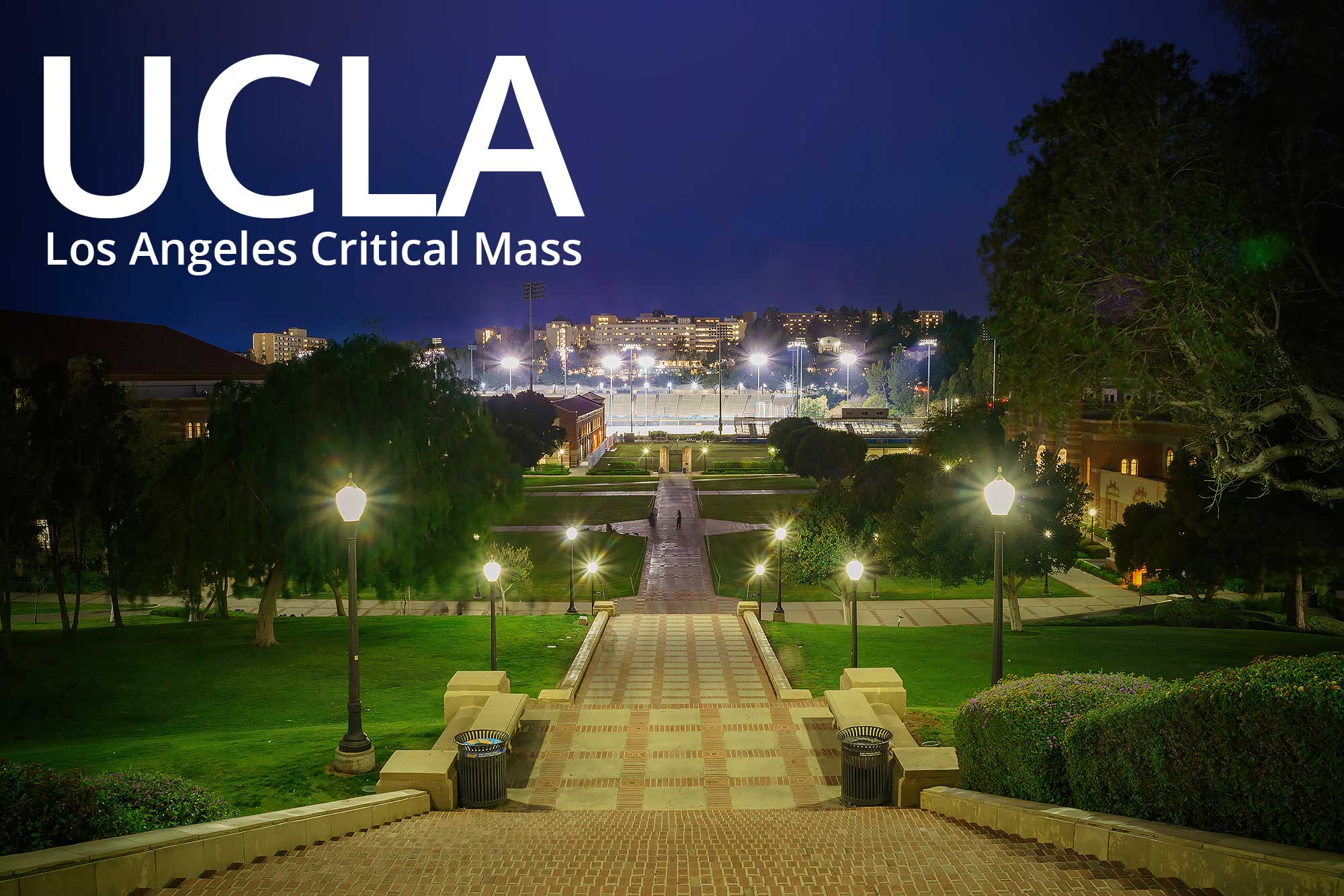
This month’s route carried special meaning. For the first time in nearly 15 years, LA Critical Mass returned to UCLA. The campus, long absent from our monthly routes, welcomed a new generation of riders who had never experienced the iconic climb or the electric feeling of rolling through Westwood as one unified movement.
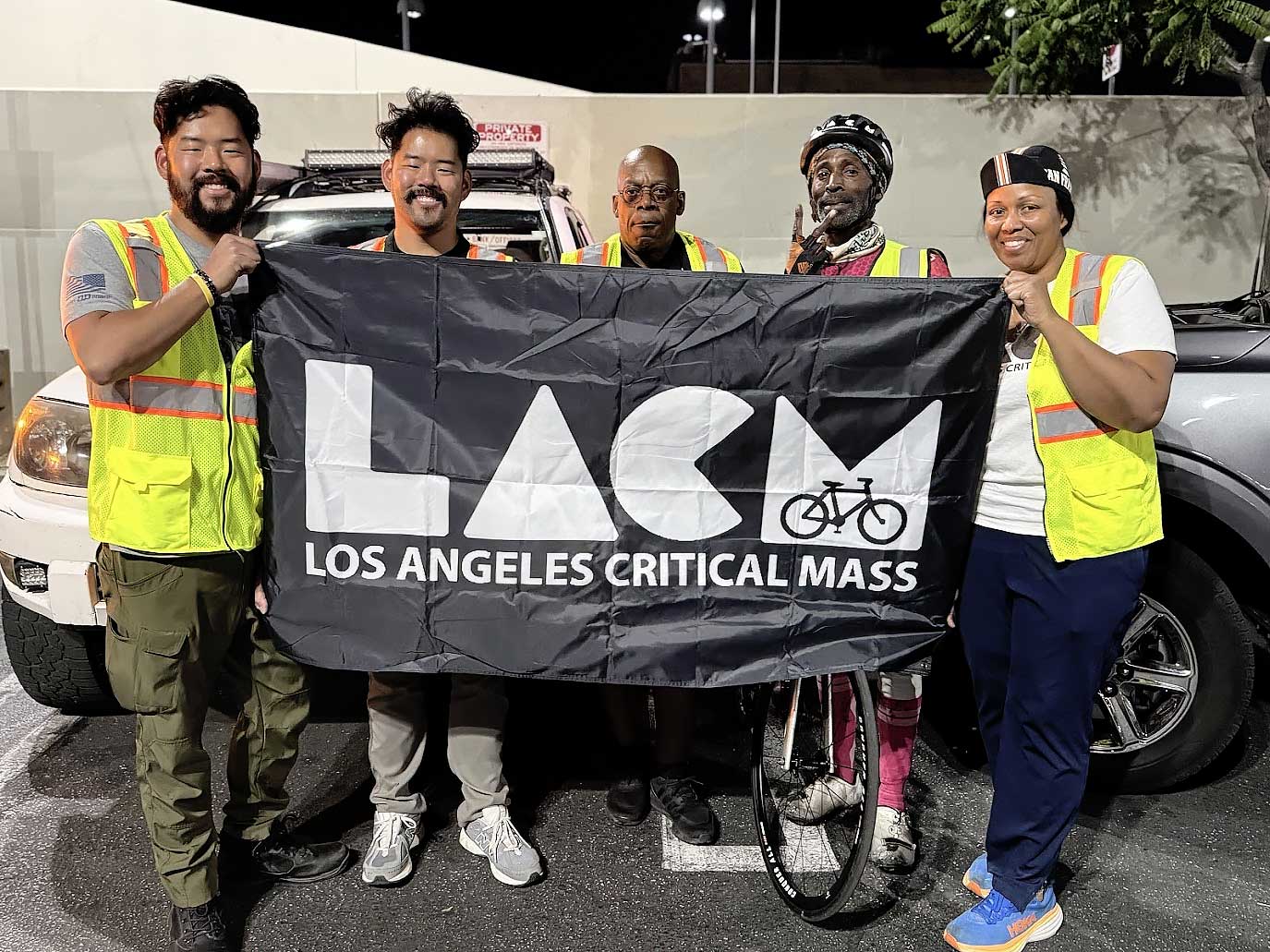
At the corner of Wilshire Blvd and Western Ave, President Lisa of LA Critical Mass pulled up to the front of the crowd to brief the riders. Her message was clear, grounded, and rooted in the values that have kept this ride alive for more than two decades:
Respect the streets.
Respect the communities we pass through.
Respect each other.
She reminded everyone of the ride rules, the importance of staying together, and the responsibility we carry when thousands move as one through the city.
With that, the first ride of the year launched—smooth, joyful, and powerful. The weather cooperated, the energy was high, and the return to UCLA felt like a homecoming long overdue.
Last month’s ride wasn’t just a strong start to 2026. It was a reminder of what LA Critical Mass represents: community, visibility, and the simple joy of taking over the streets on two wheels.
A Ride Route That Lit Up the City
The ride route started off with Lisa in the lead vehicle, guiding the masses north on Western toward 6th Street. As the ride made a left onto 6th, swarms of cyclists and participants engulfed the entire intersection. The scale was staggering: by the time the front of the ride was way passed Wilton Pl on 6th, the masses of participants was still leaving Western and 6th. It was a glorious sight—thousands moving as one, stretching across multiple city blocks.
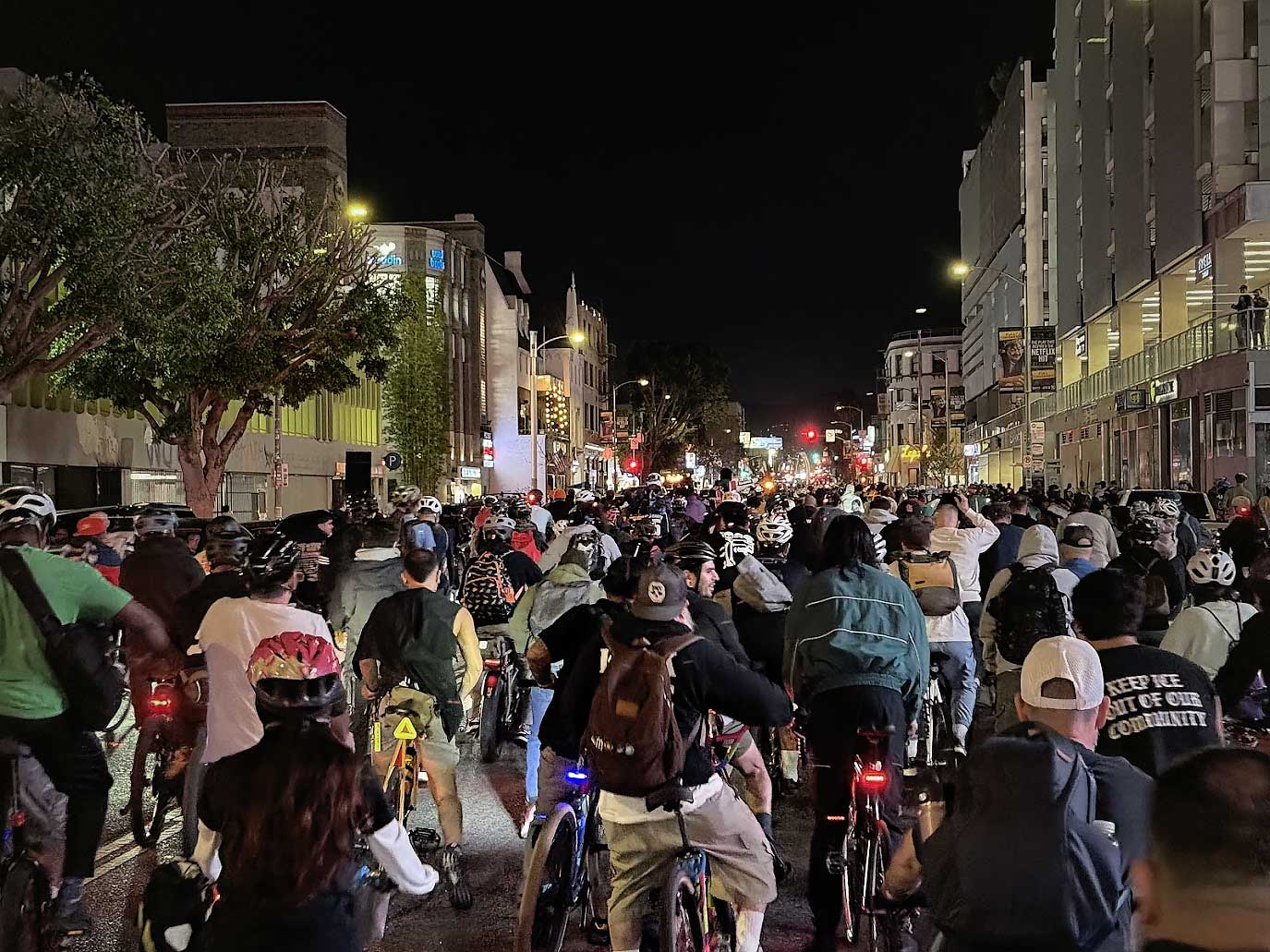
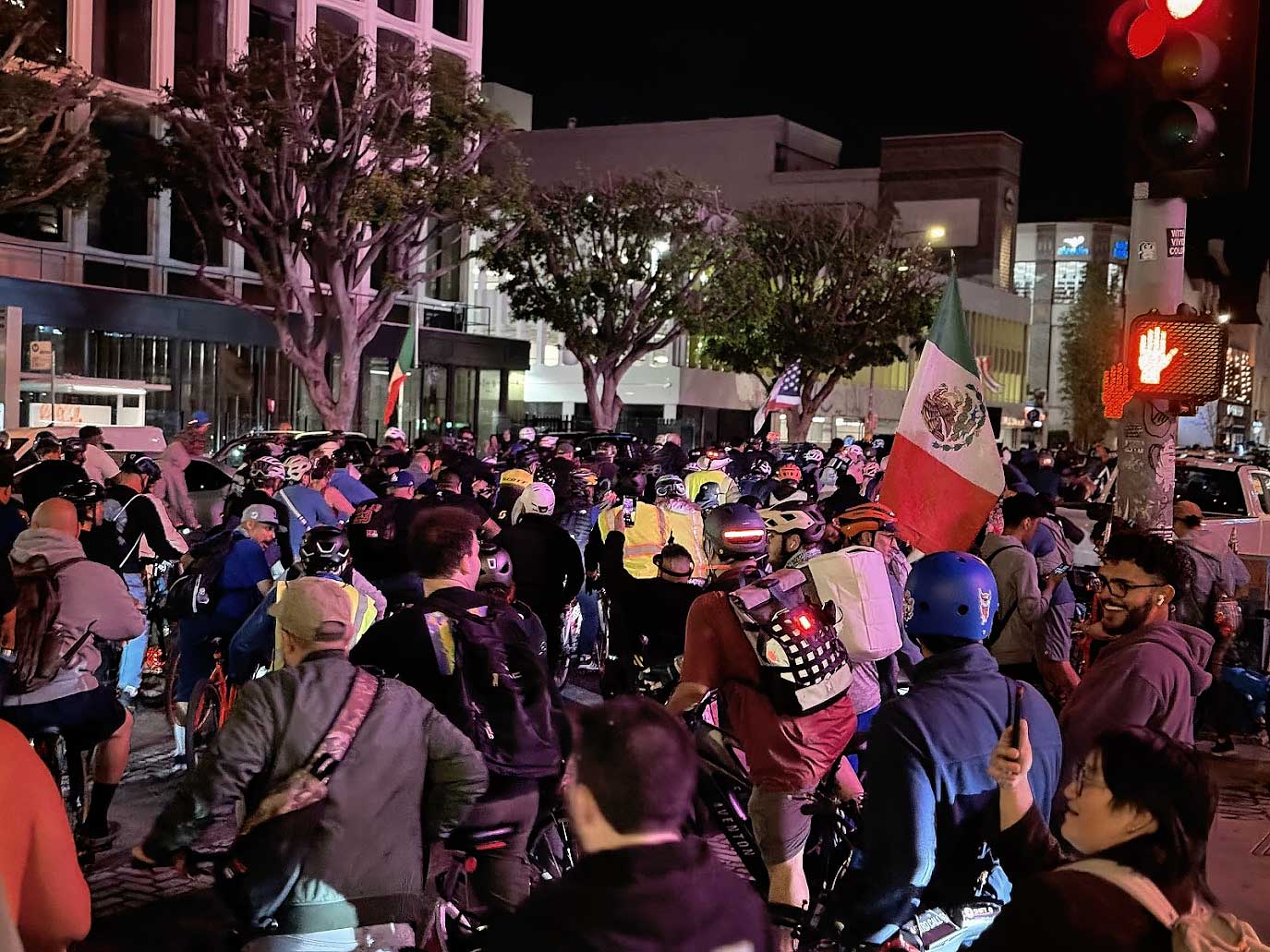
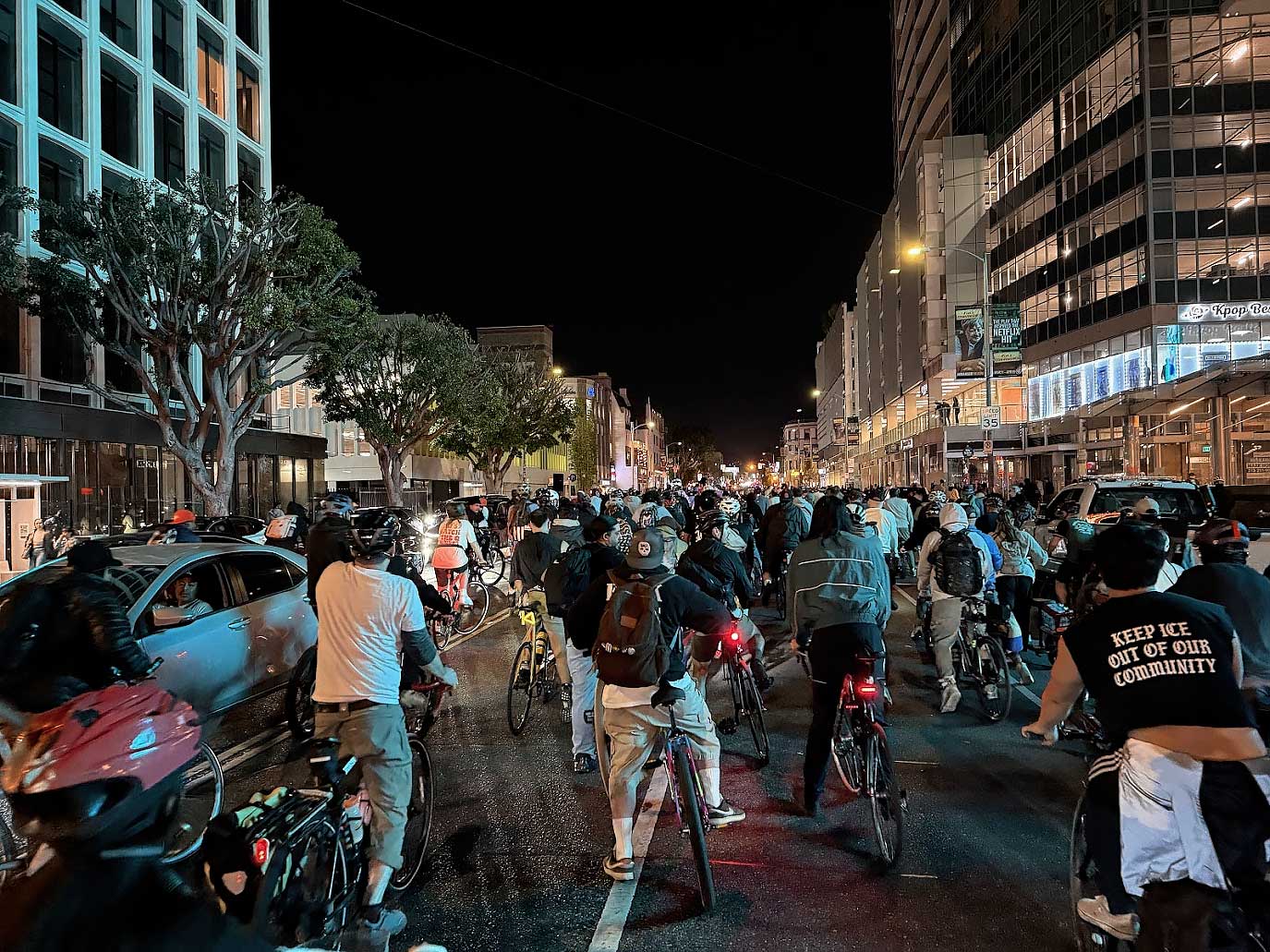
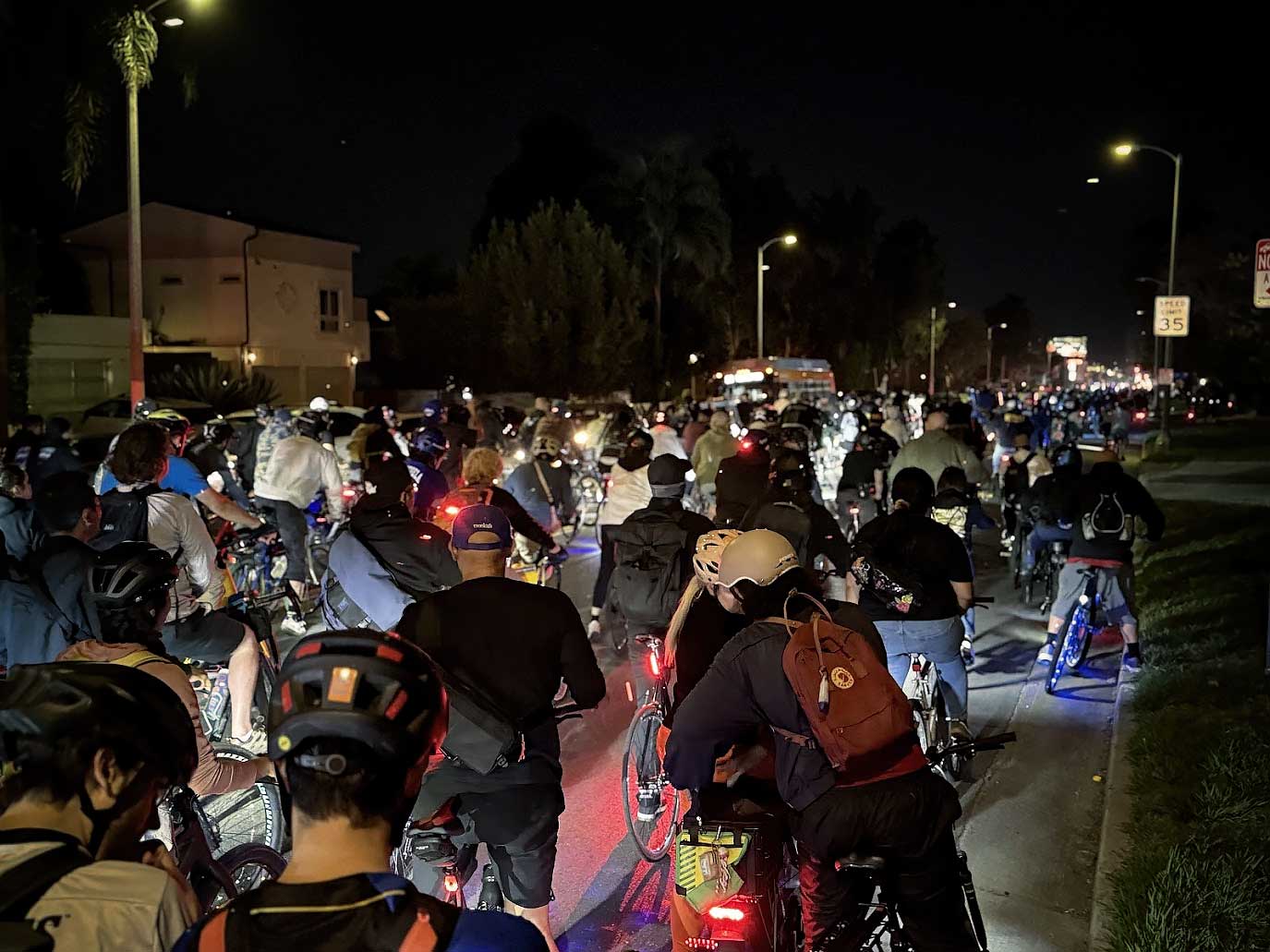
Support vehicles illuminated the back end of the ride at Western and 6th, marking the tail with bright safety lights as they followed the route to Lucerne, where the ride made a right turn. From there, the group entered Larchmont and Hancock Park, neighborhoods known for their historic landmarks, tree‑lined streets, and some of the most beautiful mansions in Los Angeles.
The ride continued with a left turn onto Melrose Avenue as the masses headed toward West Hollywood. Once the group reached La Brea and made a right, the anticipation grew. The final left turn onto Santa Monica Boulevard unleashed a wave of excitement.
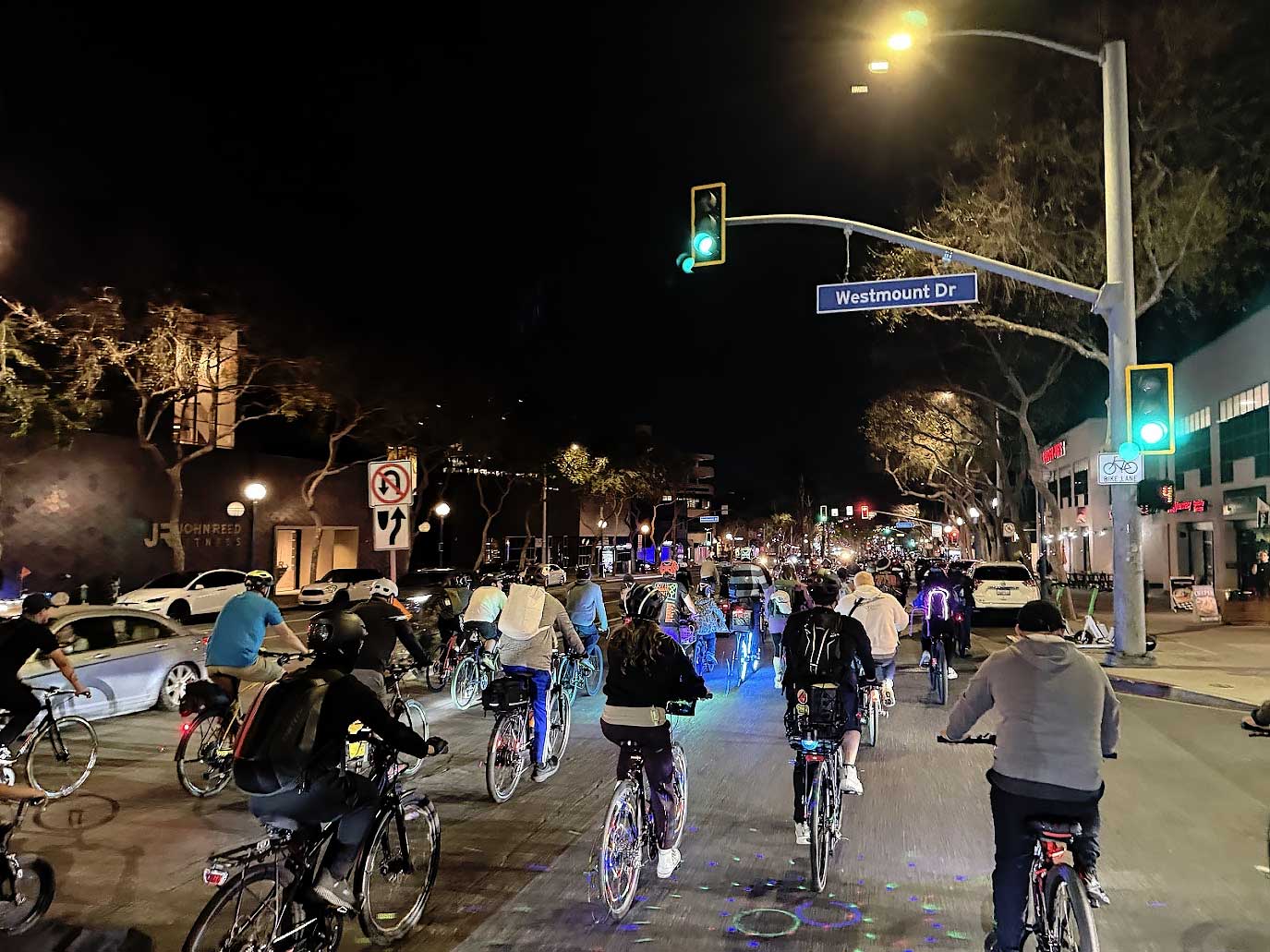
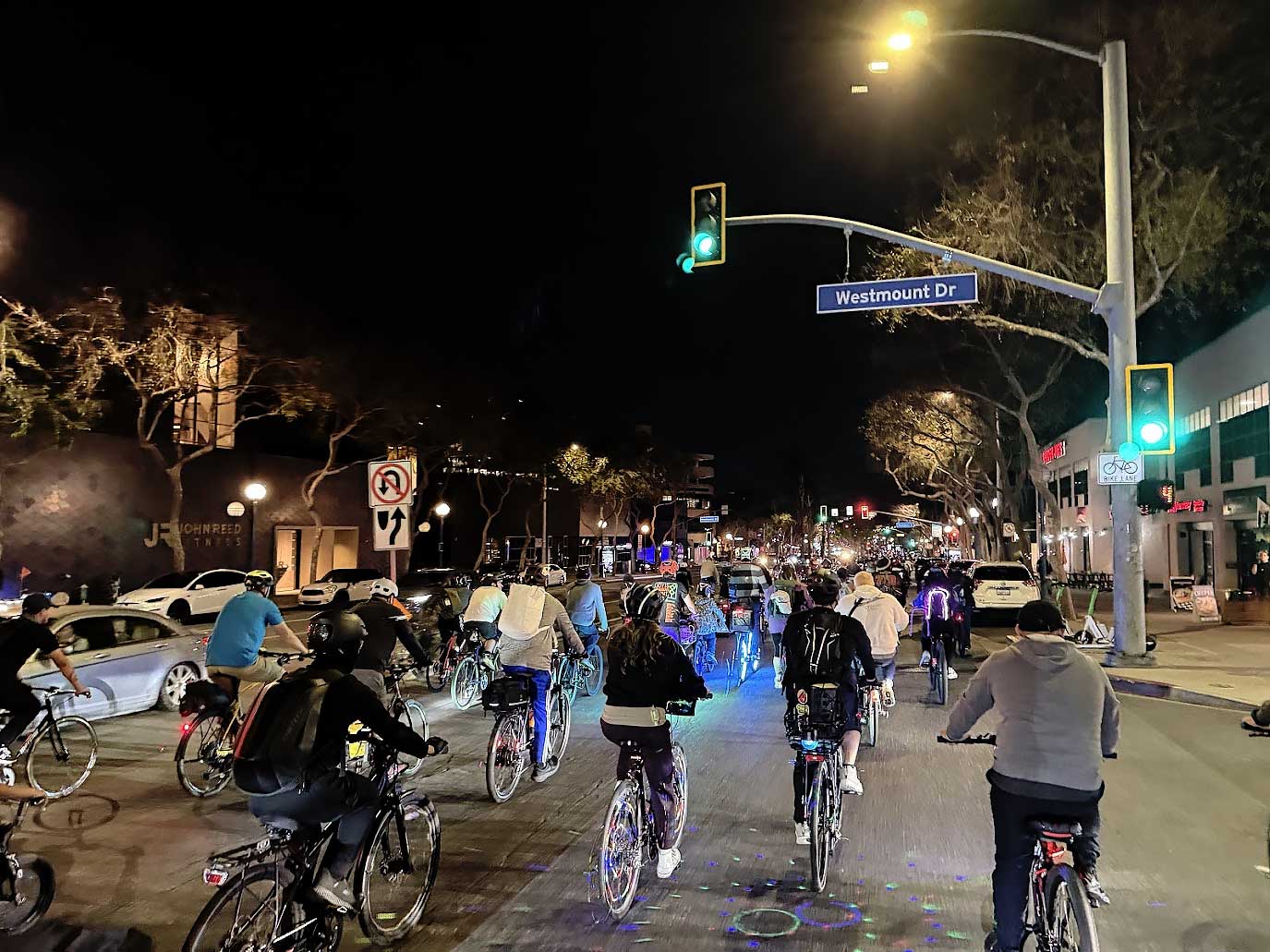
As soon as wheels hit Santa Monica Blvd, the ride roared with laughter, cheers, and pure Friday‑night joy. Thousands of participants lit up the boulevard with lights, music, and the kind of collective energy that makes people stop in their tracks.
Onlookers froze in amazement, taking pictures and recording videos as the masses engulfed West Hollywood. Once we reached the main part of West Hollywood—where the nightclubs, restaurants and major attractions, LA Critical Mass took over the major attractions with the glorious sight of all our participants.
We were headed to Beverly Hills, where Beverly Hills PD were waiting for us and where we were going to take our first break. Our first break gives everyone enough time to catch up, take a bathroom break and get some hydration before heading out to our main break. Our first break time ranges from 20–30 minutes.
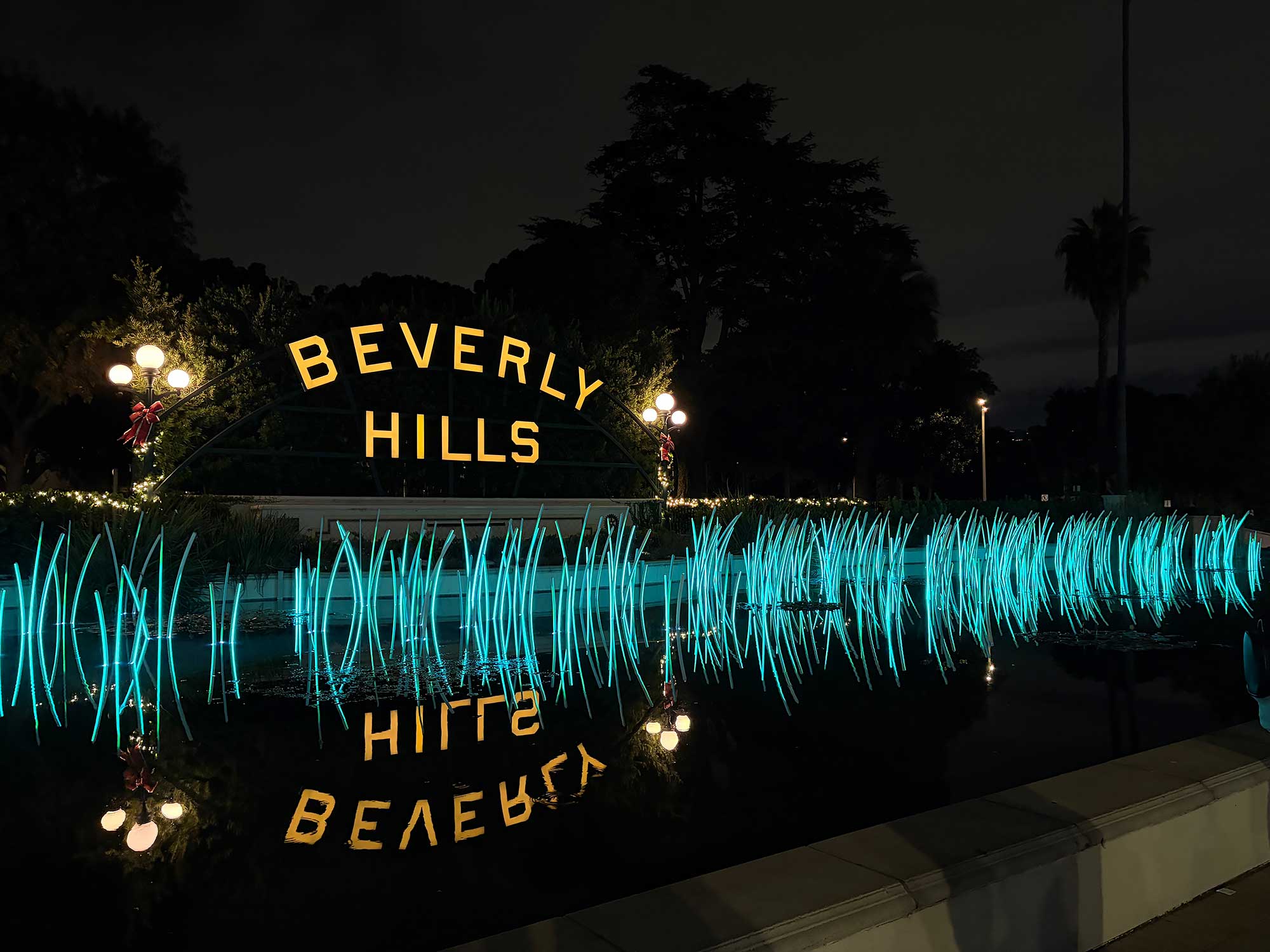
The Journey Into Century City
As we left our first break and continued west on Santa Monica Blvd, the energy shifted.
The ride continued past the elegant storefronts marking the Beverly Hills gateway, a world‑famous symbol of luxury and Hollywood mythology. The iconic Beverly Hills Sign and manicured gardens have appeared in countless films, making this stretch instantly recognizable. Rolling through it felt like entering a postcard.
As we headed west, Santa Monica Blvd opened into a glowing corridor of culture, history, and international presence. A few blocks earlier, we had passed the Los Angeles LGBT Center’s West Hollywood campus — a landmark of identity, resilience, and community that anchors the eastern stretch of the boulevard. Now, moving deeper into the Westside, we entered the section known for its cluster of international consulates and diplomatic offices. Flags from nations such as France, Colombia, Afghanistan, Brazil, Saudi Arabia, and others lined the surrounding blocks, a vivid reminder of the global community rooted in Los Angeles. Riding through this diplomatic and cultural corridor at night — thousands strong, lights flashing, wheels humming — felt symbolic. A global avenue filled with riders from every background, moving together as one.
As we pushed west, Santa Monica Blvd carried us past the residential towers that line the edge of Century City, their windows catching the glow of the ride as we moved in unison. Further along the boulevard, the mass rode just north of the historic Fox Studios lot — a cornerstone of nearly a century of film history. From classic Hollywood productions to modern blockbusters, the studio’s presence anchors this part of Los Angeles, and even from a distance, riding thousands strong through the Westside’s film district added another layer of LA’s story to the night.
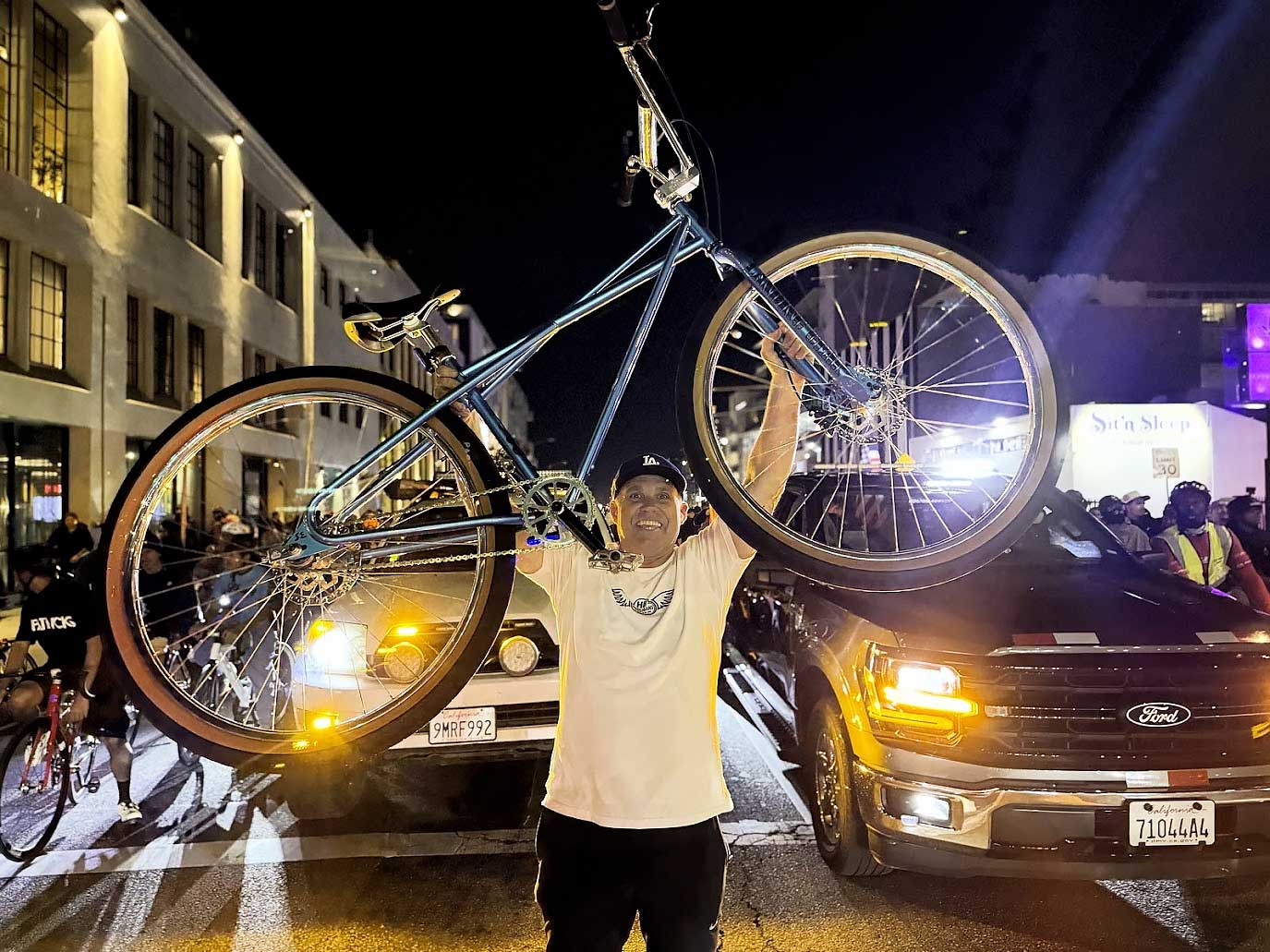
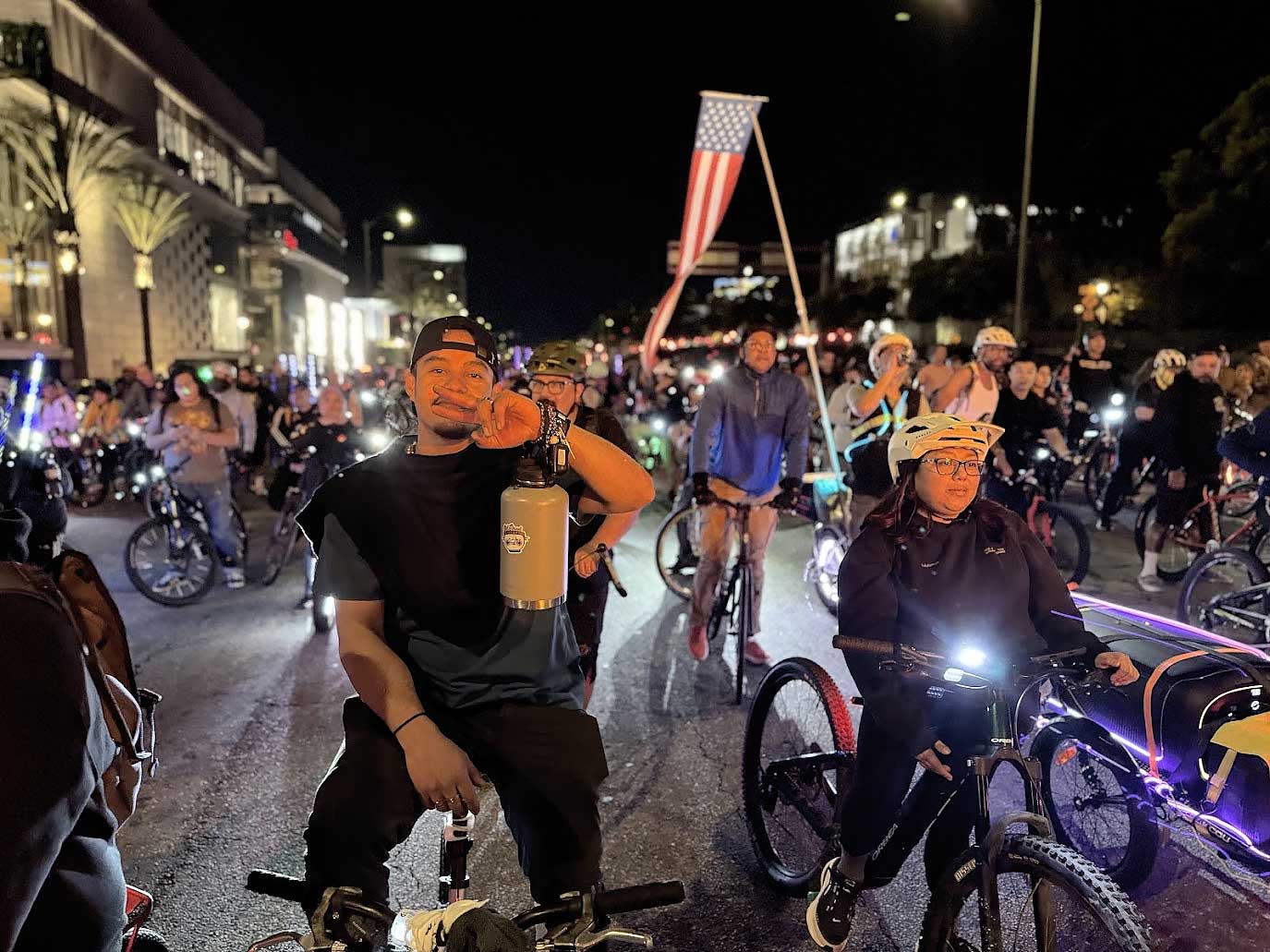
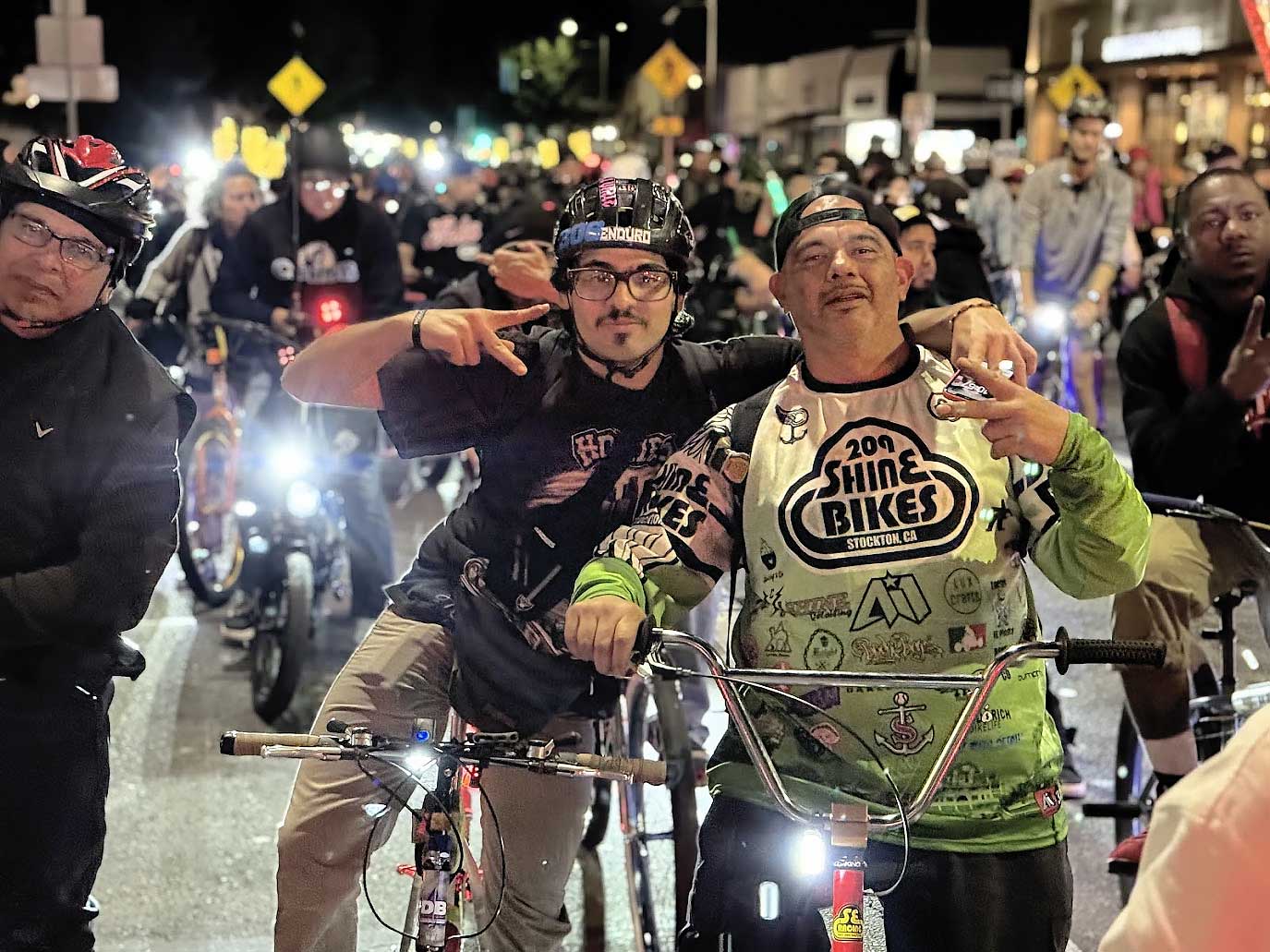
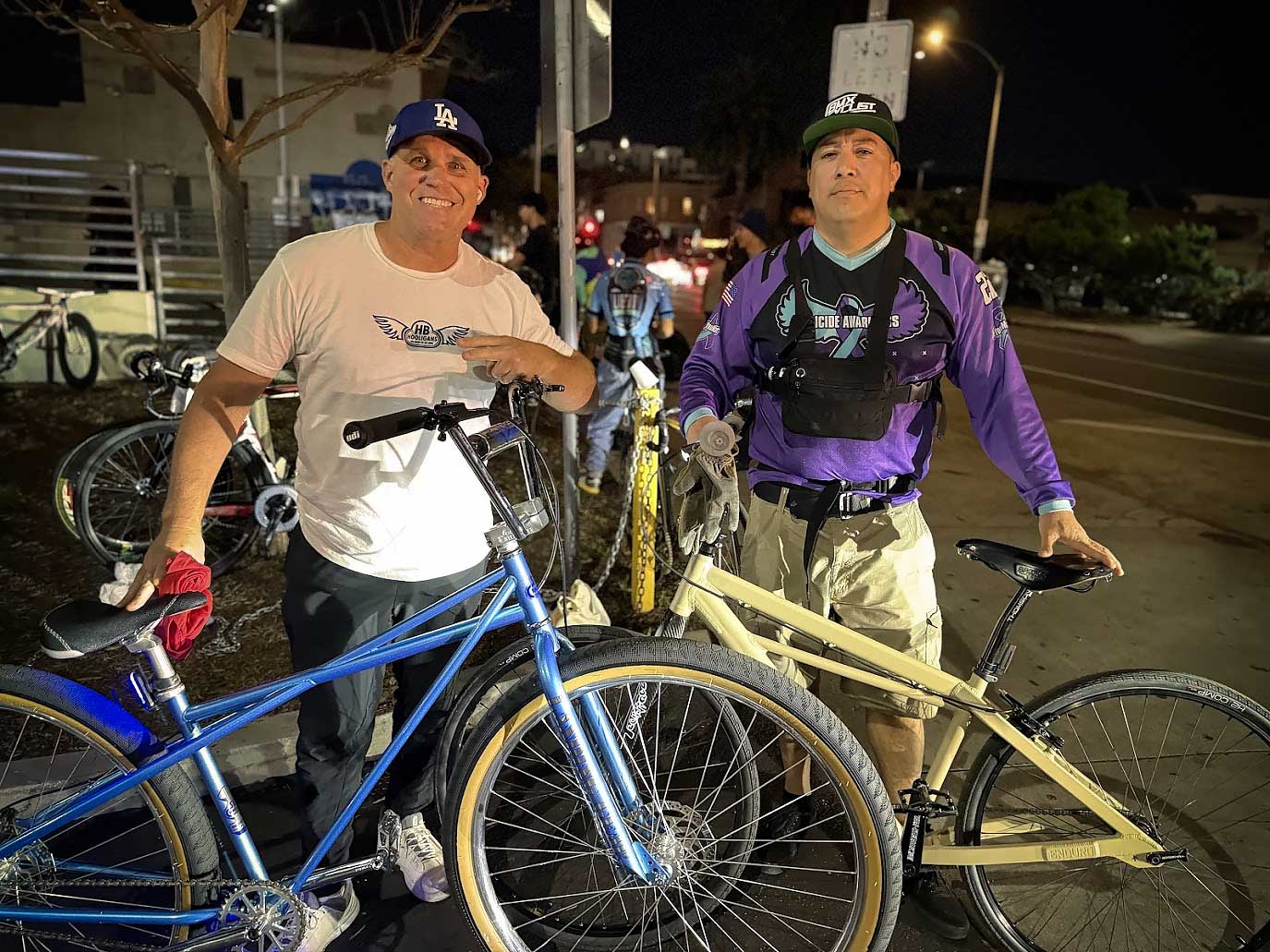
Off to the south, the iconic Century City Towers rose above the district — 1960s skyscrapers born from the old Fox backlot, their mirrored faces scattering our lights as we continued west.
The Climb Into Westwood: A Challenge Met With Pure Determination
As we pushed west, Santa Monica Blvd opened into a glowing corridor of culture, history, and international presence — a stretch of the city that feels alive even at night.
Everyone could feel it: the anticipation, the curiosity, that quiet buzz that always settles over the group right before a climb. Our riders never know the full route, but anyone familiar with Los Angeles terrain could sense what was coming. Century City and Westwood rises above the flat stretches of Beverly Hills and West Hollywood, and the approach is a long, steady ascent you can feel in your legs before you even see it.
But this wasn’t just any climb. This was our long‑awaited return to UCLA after nearly 15 years.
Our executive team spent weeks preparing for this moment — pre‑rides, scouting missions, and route tests to find the smoothest gradients, the safest lines, and the most forgiving inclines. This part of the city is known for its rolling hills and sudden elevation changes, and we wanted every rider — first‑timers and veterans alike — to take on the challenge together.
As the incline began, the shift was immediate. Pedals tightened. Breathing deepened. Conversations faded into focused silence. The laughter didn’t disappear — it transformed into determination. Century City is stunning at night, but its hills can be unforgiving on a bike.
Block by block, the climb built. Santa Monica Blvd stretched ahead like a glowing ribbon under the streetlights, and the mass moved as one steady, powerful wave. Riders encouraged each other. Some pushed through the burn. Others locked into their rhythm. Our support vehicles held formation, lighting the way and keeping everyone safe.
The true climb began as we passed Beverly Glen Blvd. Lisa led the ride to the top, stopping as needed — a practice we use to ensure we never leave gaps. Keeping the group tight protects our riders from motorists trying to cut through or ride within the mass.
And then, the moment everyone waits for: the crest.
Once the last riders reached the top, the energy shifted again. We were thousands strong, rolling into a downhill that felt like pure reward. The breeze, the speed, the shared momentum — it was electric.
Even at night, Santa Monica Blvd revealed its landmarks and history as we descended. The city felt wide open, alive, and ours.
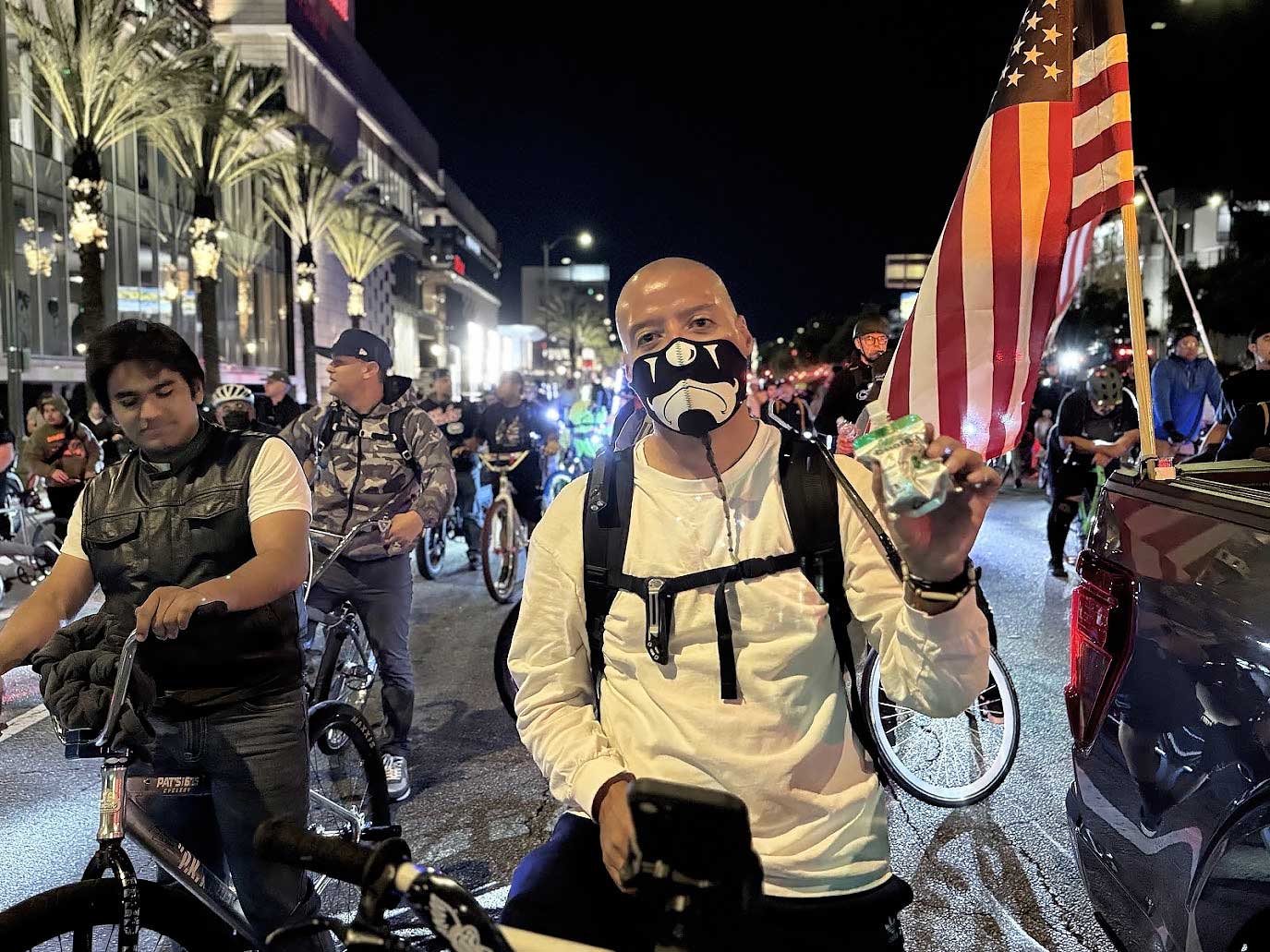
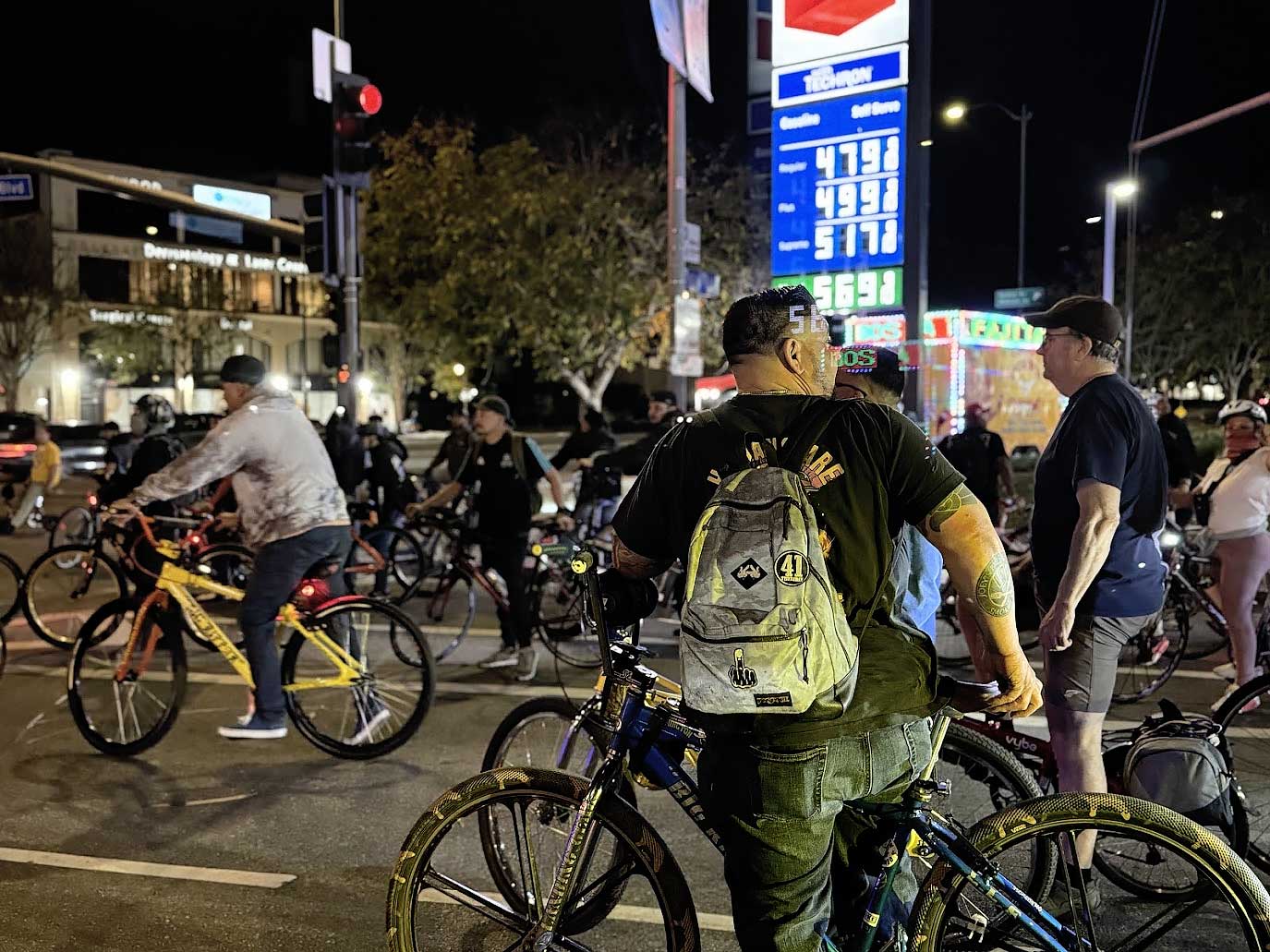
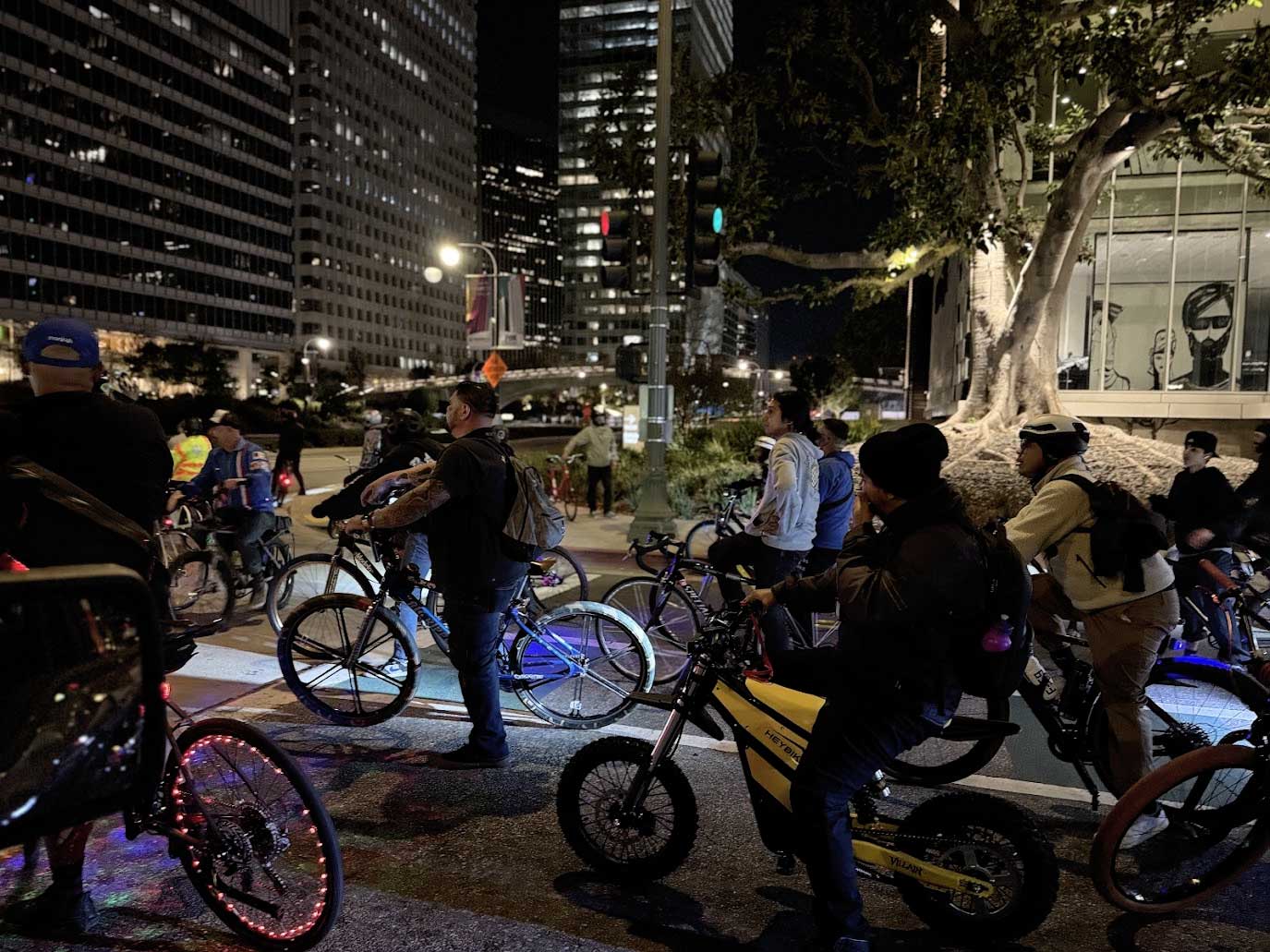
By the time we were in Westwood, we had already passed a string of landmarks stretching from Beverly Hills through Century City — each one lighting the way as thousands of riders moved west. And then, rising above everything ahead of us, came one of the most striking sights on the route: the Los Angeles California Temple. Its illuminated spire dominated the skyline, a massive silhouette against the night. Completed in 1956 and once the largest LDS temple in the world, it stands as a monument to the post‑war boom that shaped modern Los Angeles. Even in the dark, its white stone and sweeping grounds were impossible to miss as the entire mass streamed past, carrying us closer to the long‑awaited return to UCLA.
The UCLA Approach
From Santa Monica Blvd, we made a quick right turn past Veterans Ave, rolling by the Jack in the Box before making another right onto Greenfield Ave. This was the easiest street in the area for the final climb toward UCLA—a route our executive team had carefully selected after multiple pre‑rides. We took January’s 2026 ride through this neighborhood specifically to avoid the steep, punishing incline on Westwood and Veteran Ave. Greenfield offered a smoother, more manageable ascent for thousands of riders moving together.
Once we reached Ohio Ave, we made another quick right, followed by a left onto Veteran Ave, where the road finally leveled out. The relief was immediate. After the long climb through Century City and Westwood’s rolling terrain, this straightened stretch of Veteran felt like a gift.
As we approached Wilshire, the excitement in the crowd was unmistakable. Riders cheered, bells rang, and conversations erupted with anticipation. Many participants already knew exactly what this meant. Crossing Wilshire was the signal everyone had been waiting for—it was all UCLA from here.
Passing Wilshire, we made a quick right onto Kinross Ave, heading straight toward Westwood Blvd. The nighttime crowds in this area were almost entirely students, and the energy was electric. The sidewalks glowed with movement—students laughing, filming, cheering, and reacting in real time as LA Critical Mass engulfed the village. The nightlife, the neon, the campus buzz—it all blended into a perfect backdrop for thousands of cyclists rolling through together.
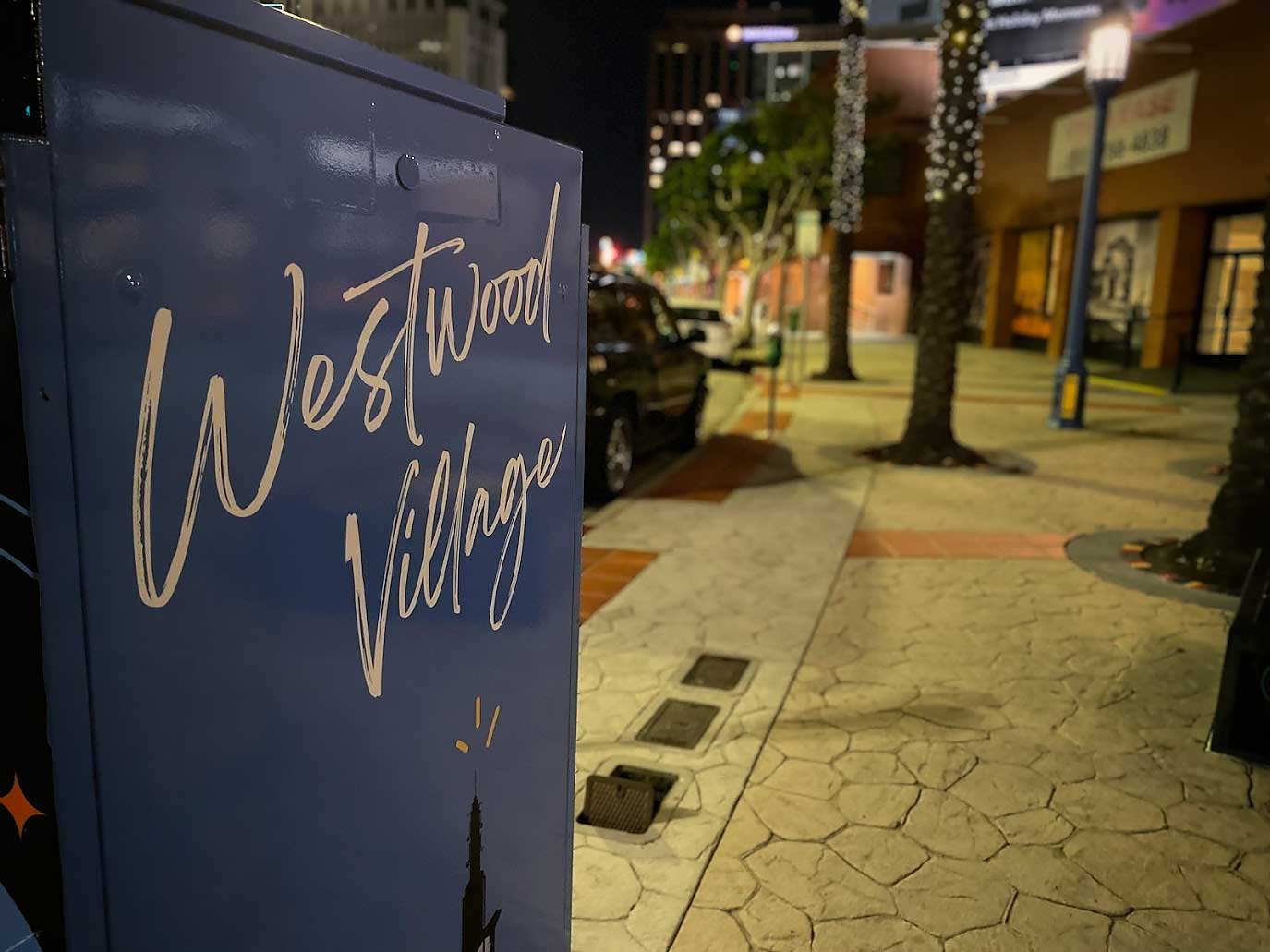
Westwood Village itself is a historic 1920s‑era district built in Mediterranean Revival style. Home to the Fox Village Theater and generations of UCLA student life, it has long been a hub of nightlife, film premieres, and campus culture.
We were headed to our main break area.
The Atmosphere at the Main Break
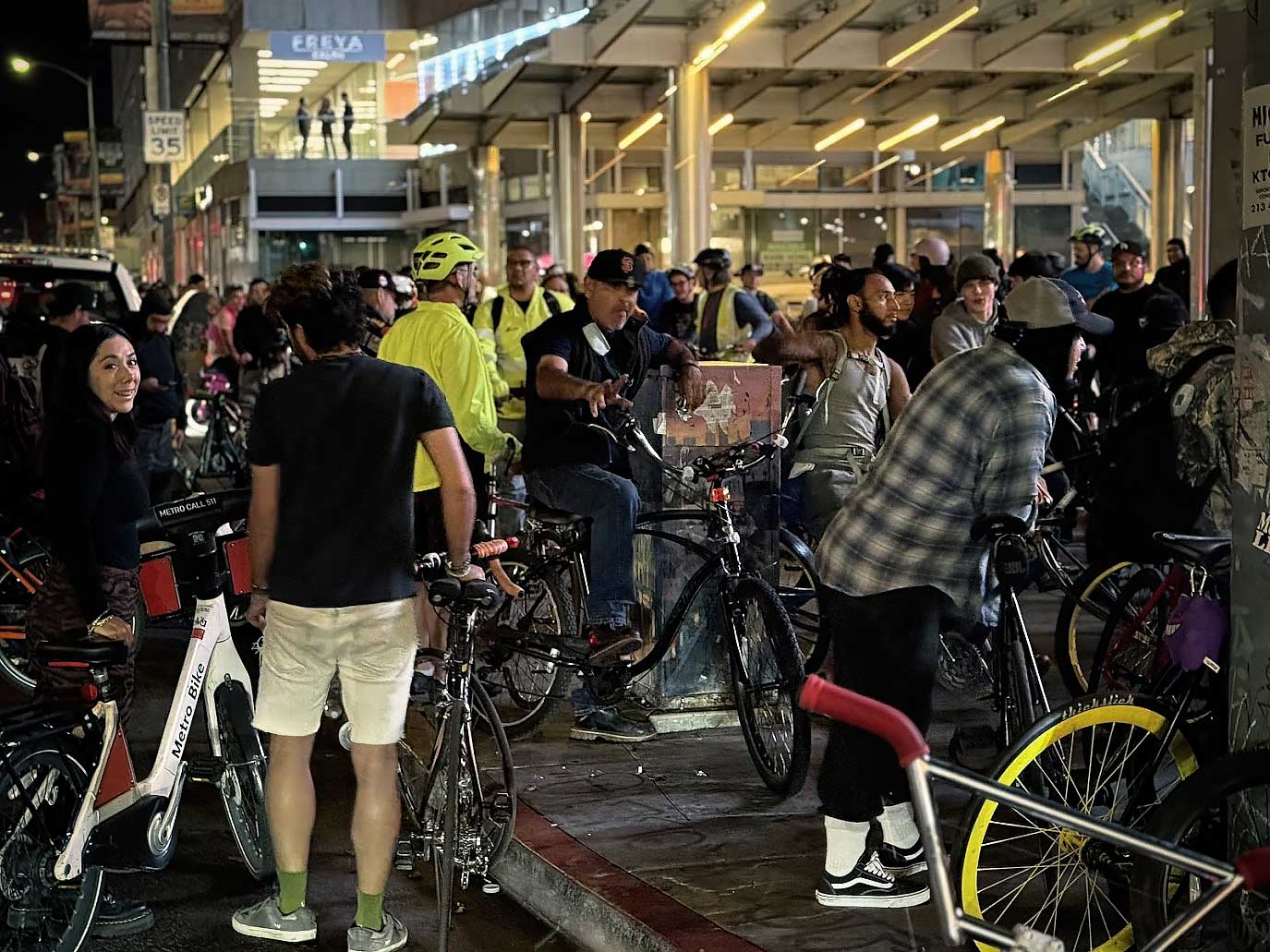
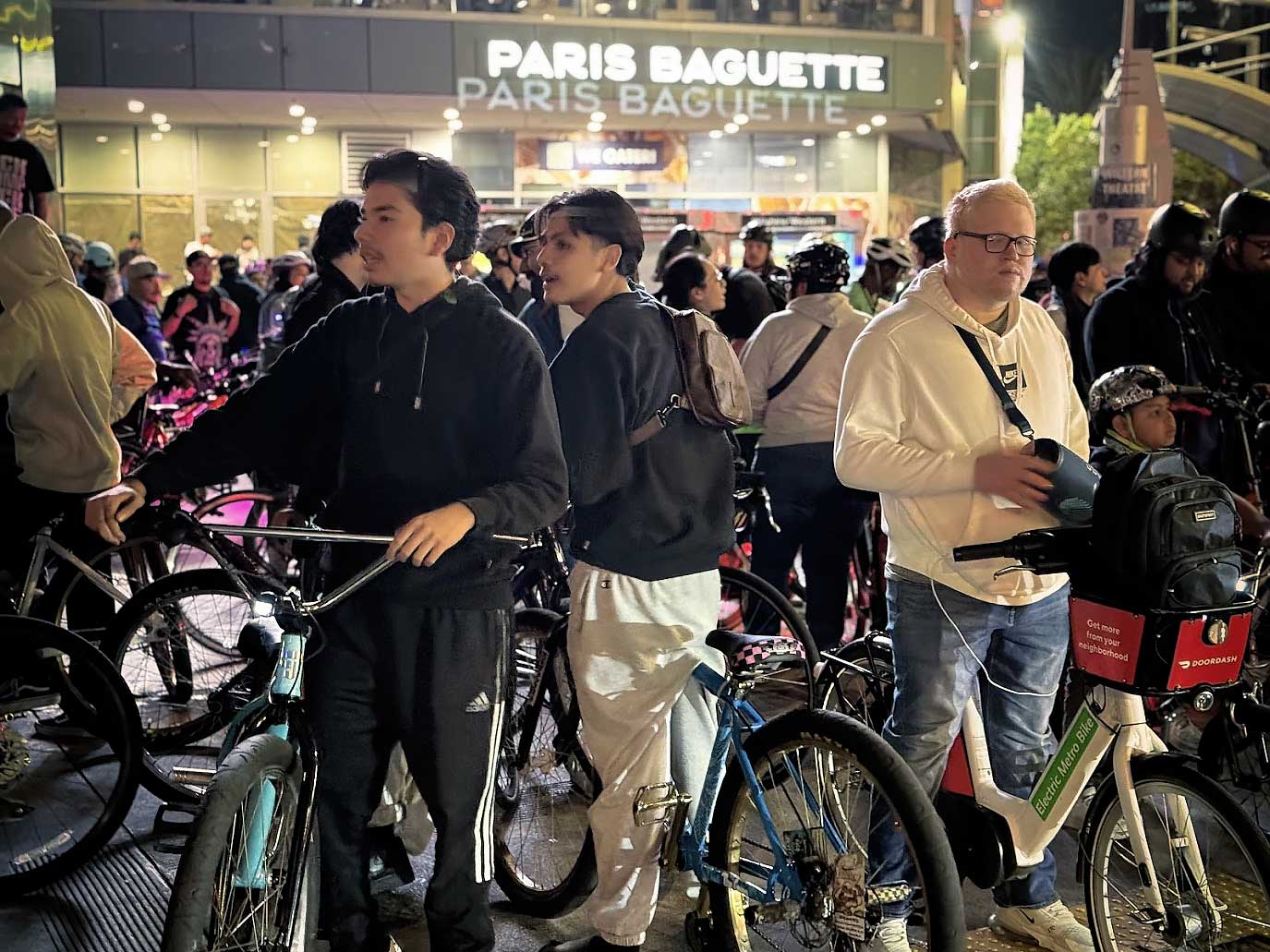
The moment we pulled into our main break area, the atmosphere transformed into something unforgettable. Thousands of riders filled the corner across from UCLA, creating a scene that felt part festival, part reunion, and part celebration of everything LA Critical Mass stands for.
Bike lights flickered across buildings, music echoed through the village, and the air buzzed with conversations, laughter, and the shared triumph of making it to UCLA after nearly 15 years.
This break wasn’t just a pause—it was a refueling station in every sense of the word.
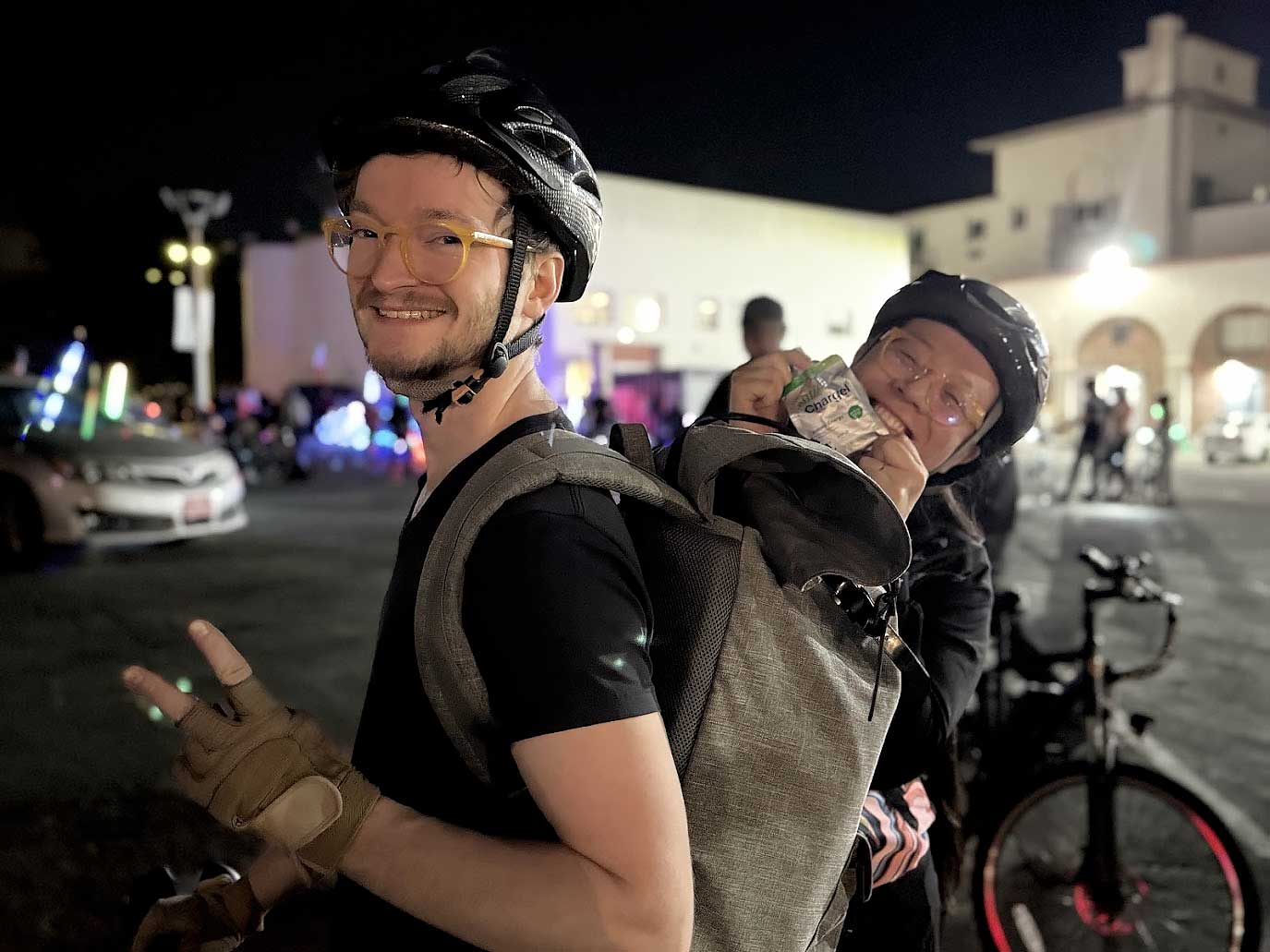
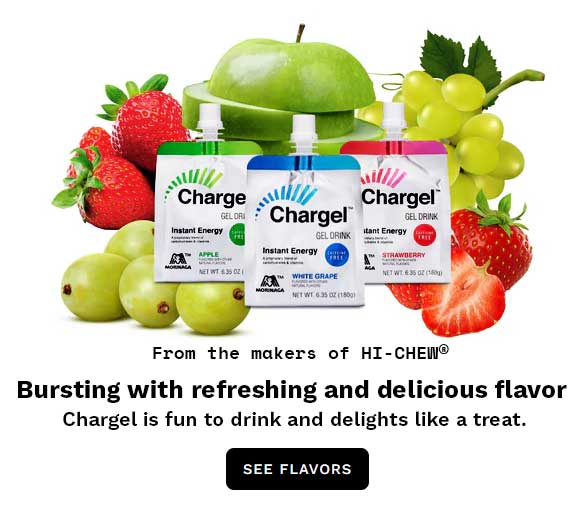
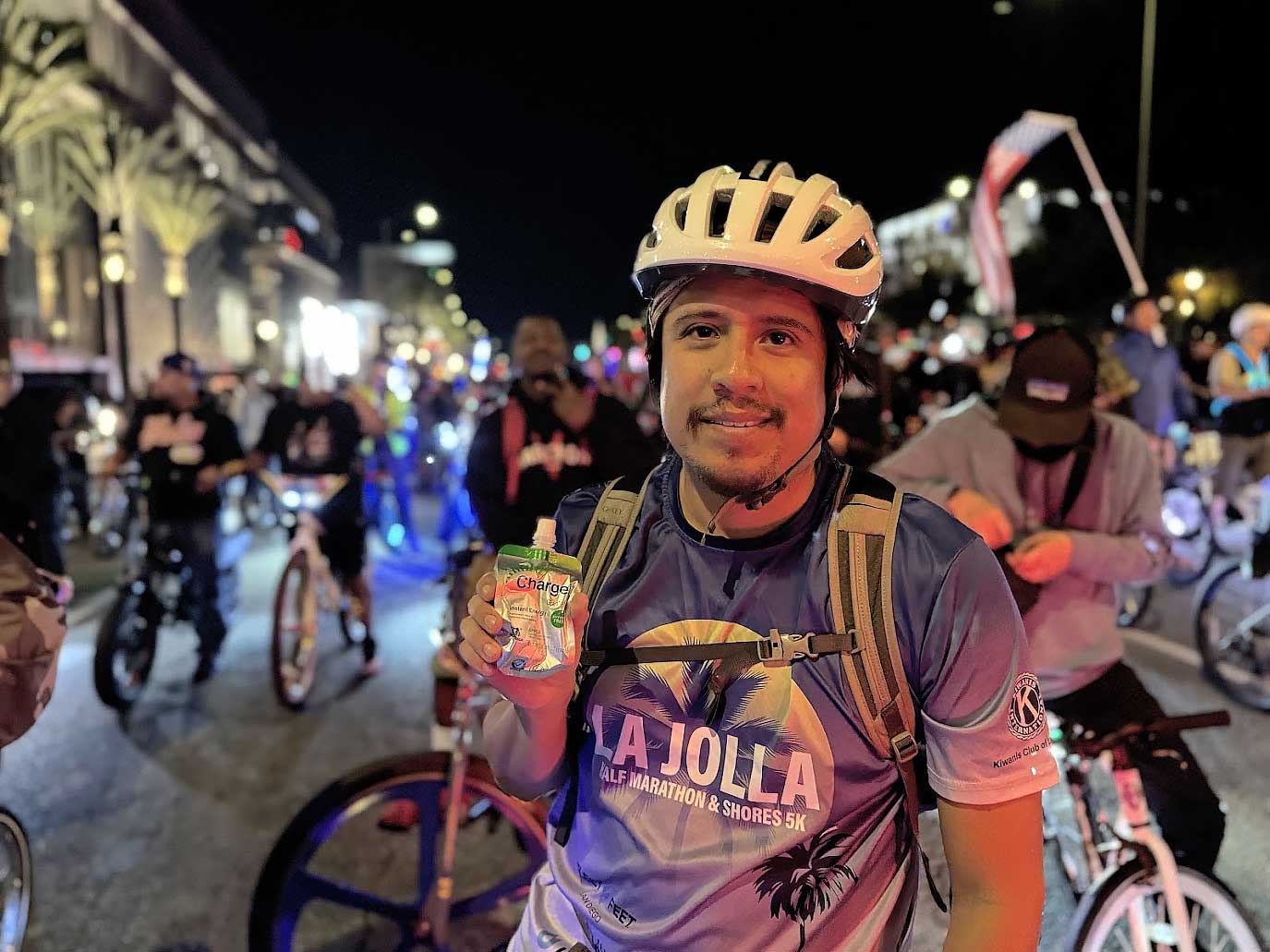
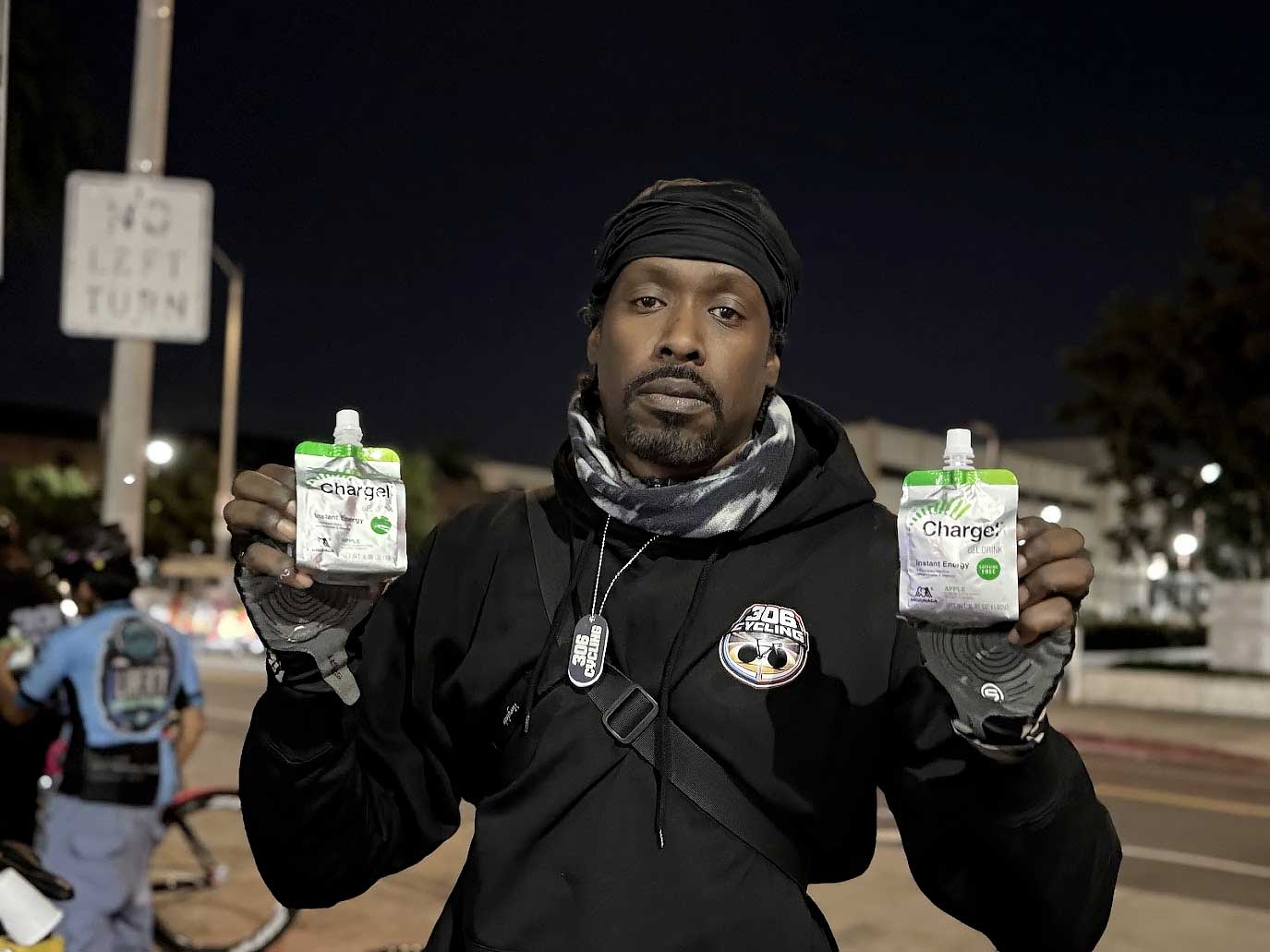
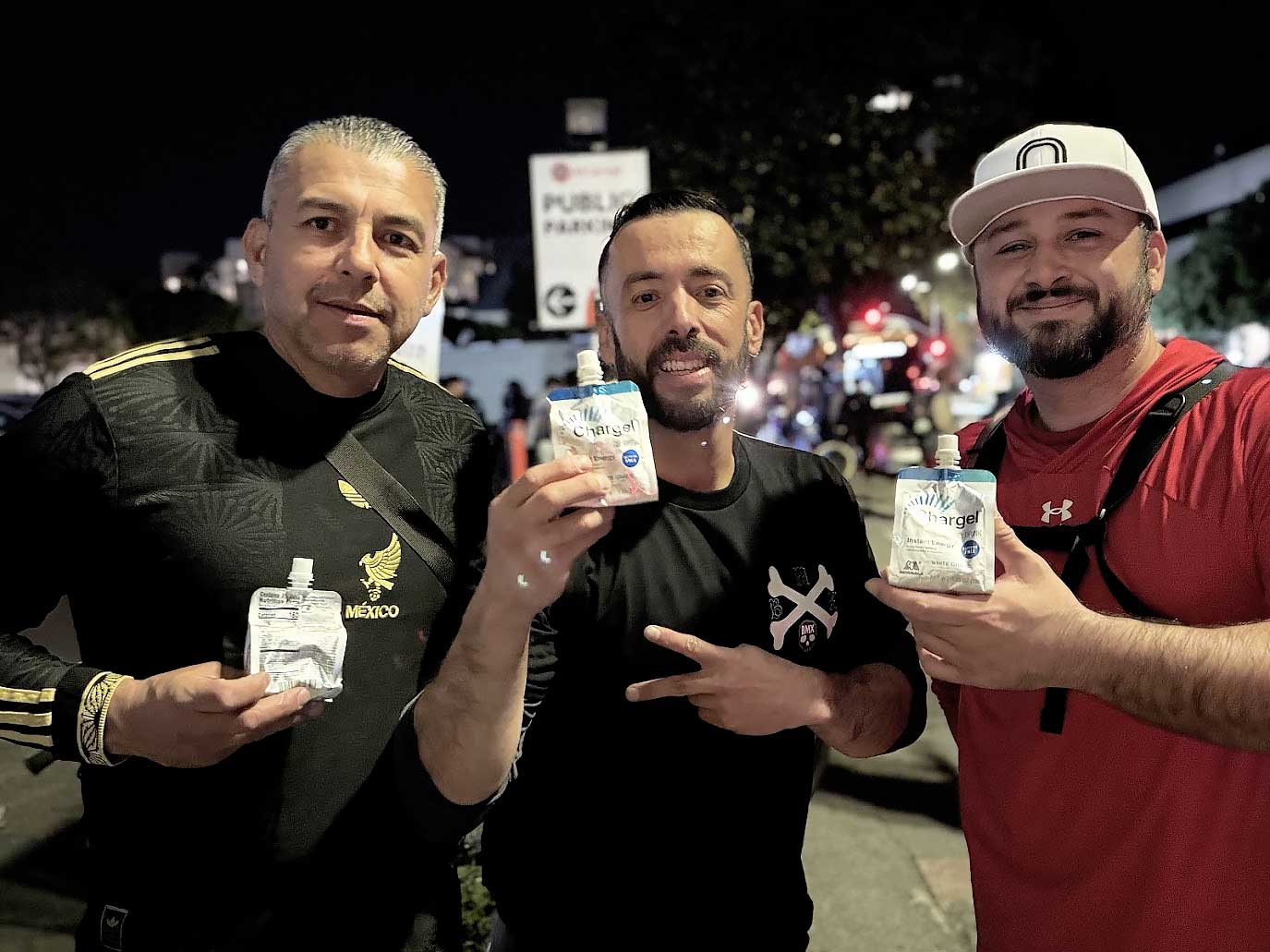
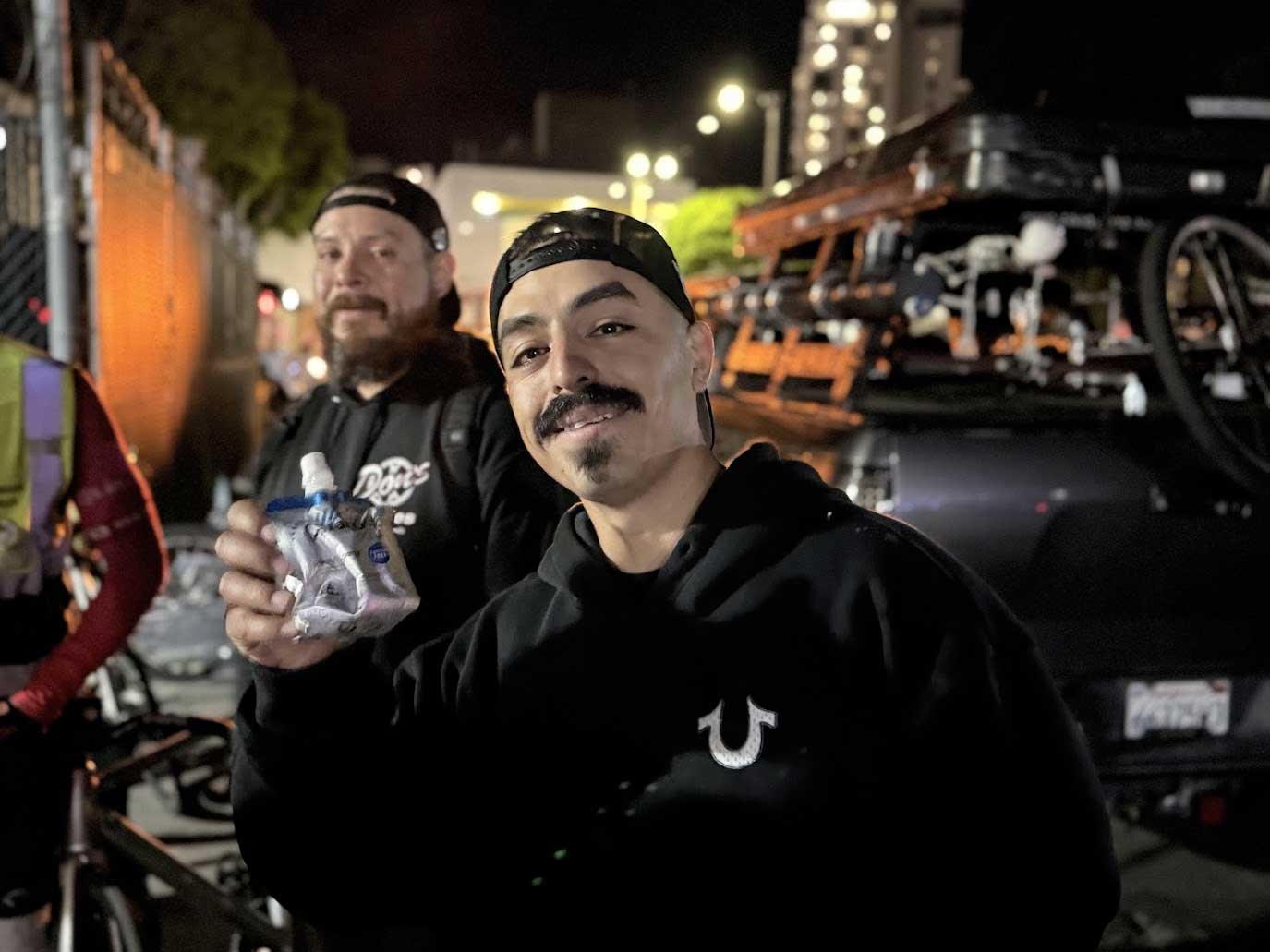
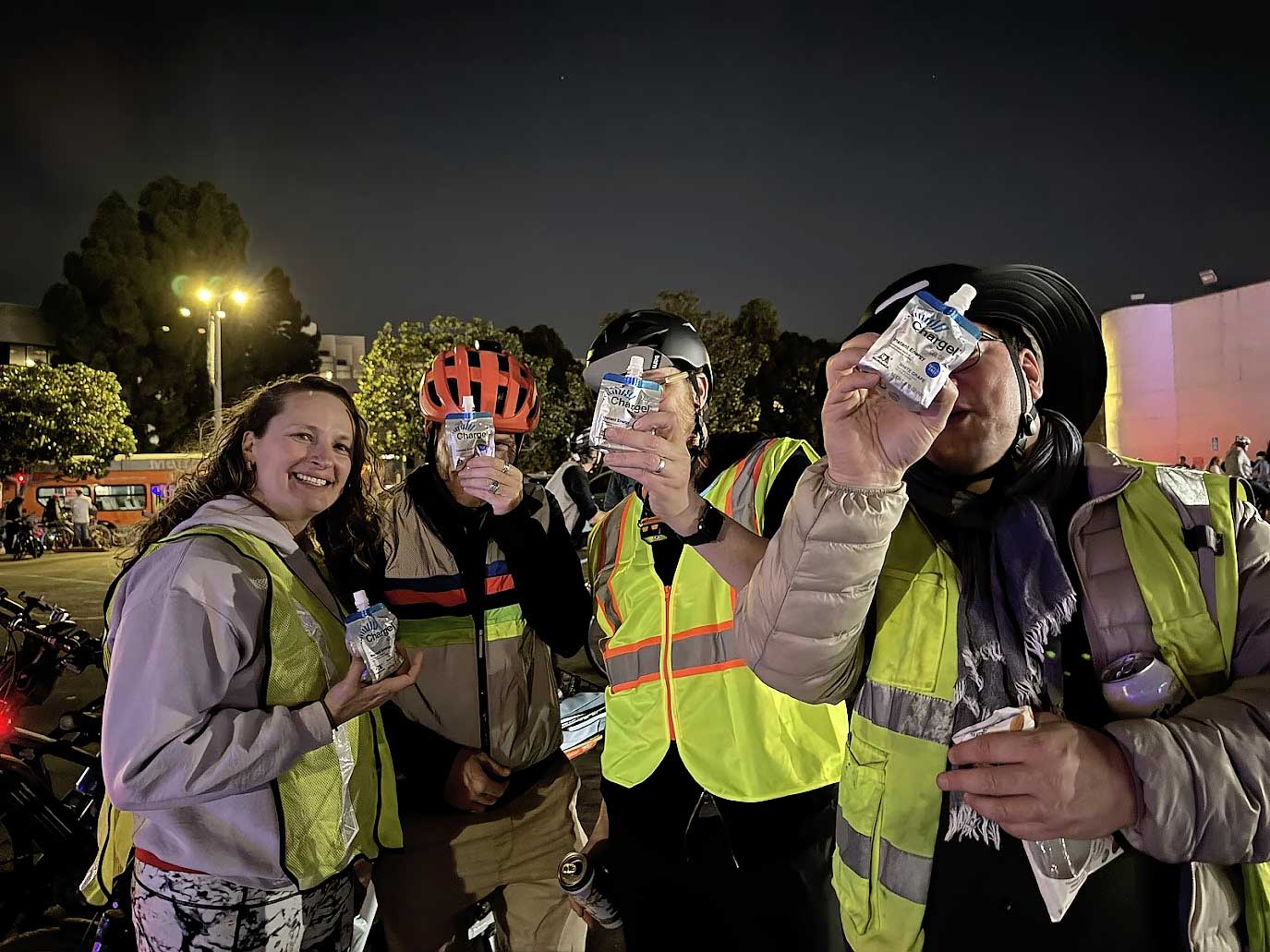
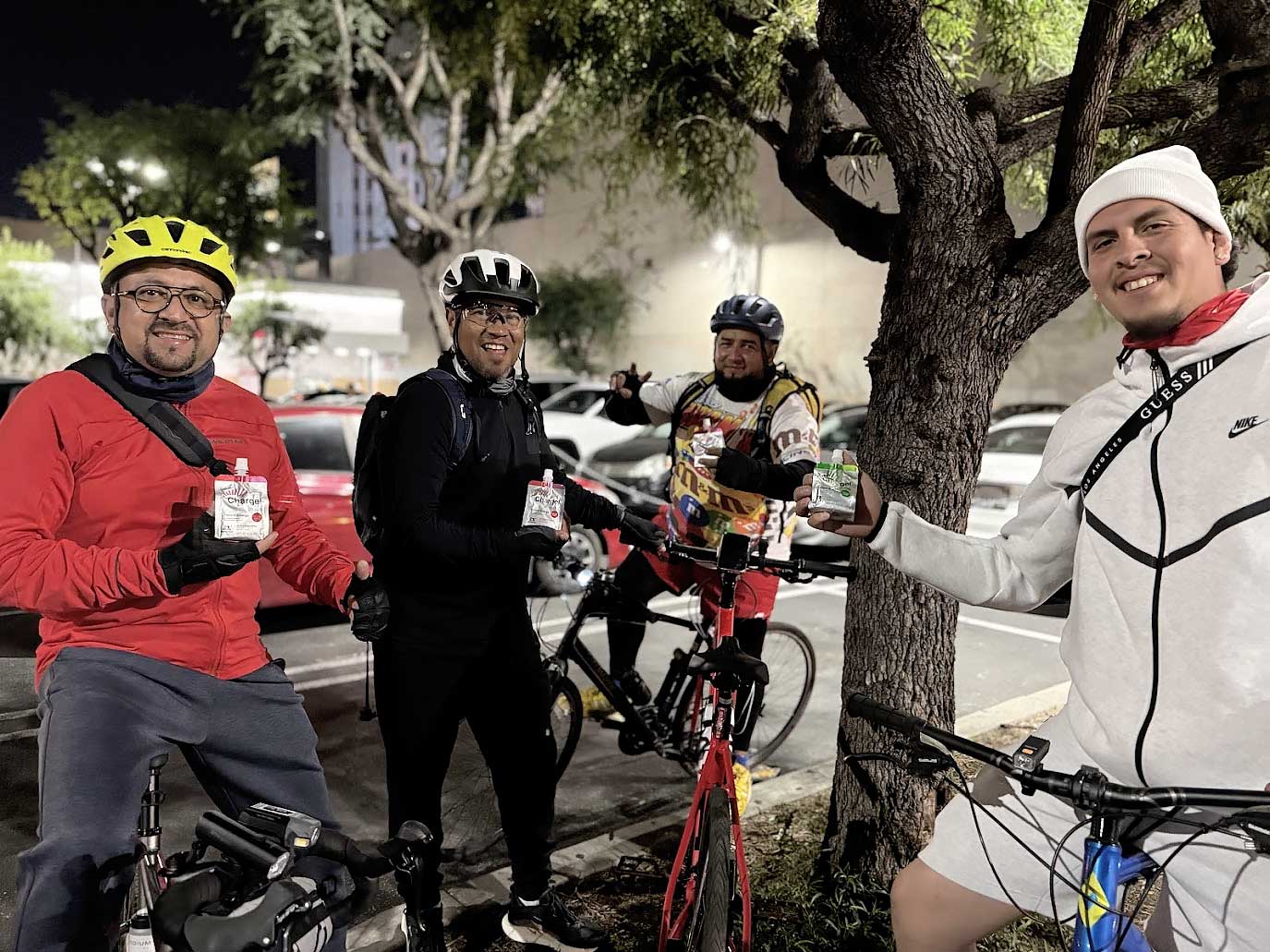
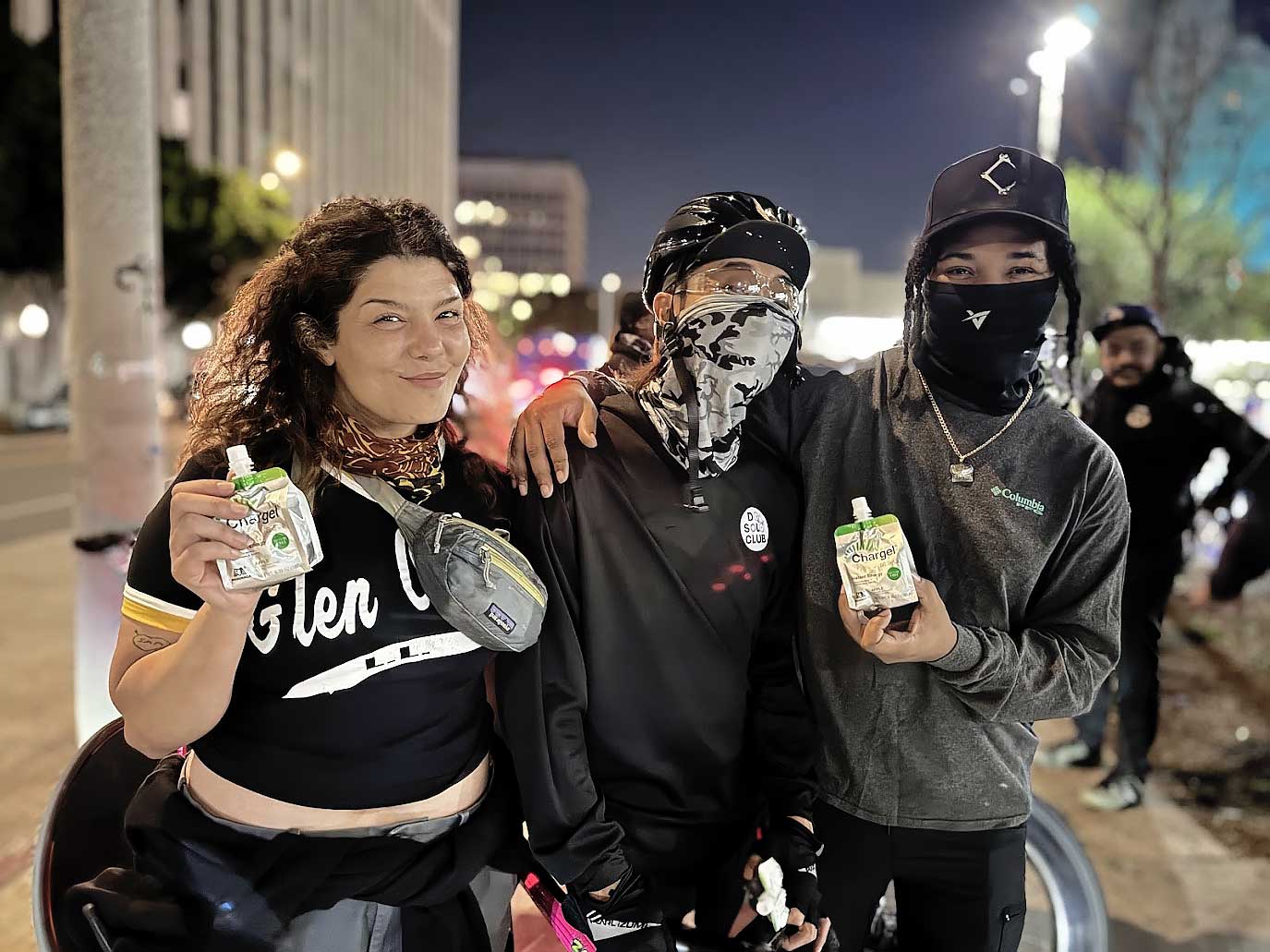
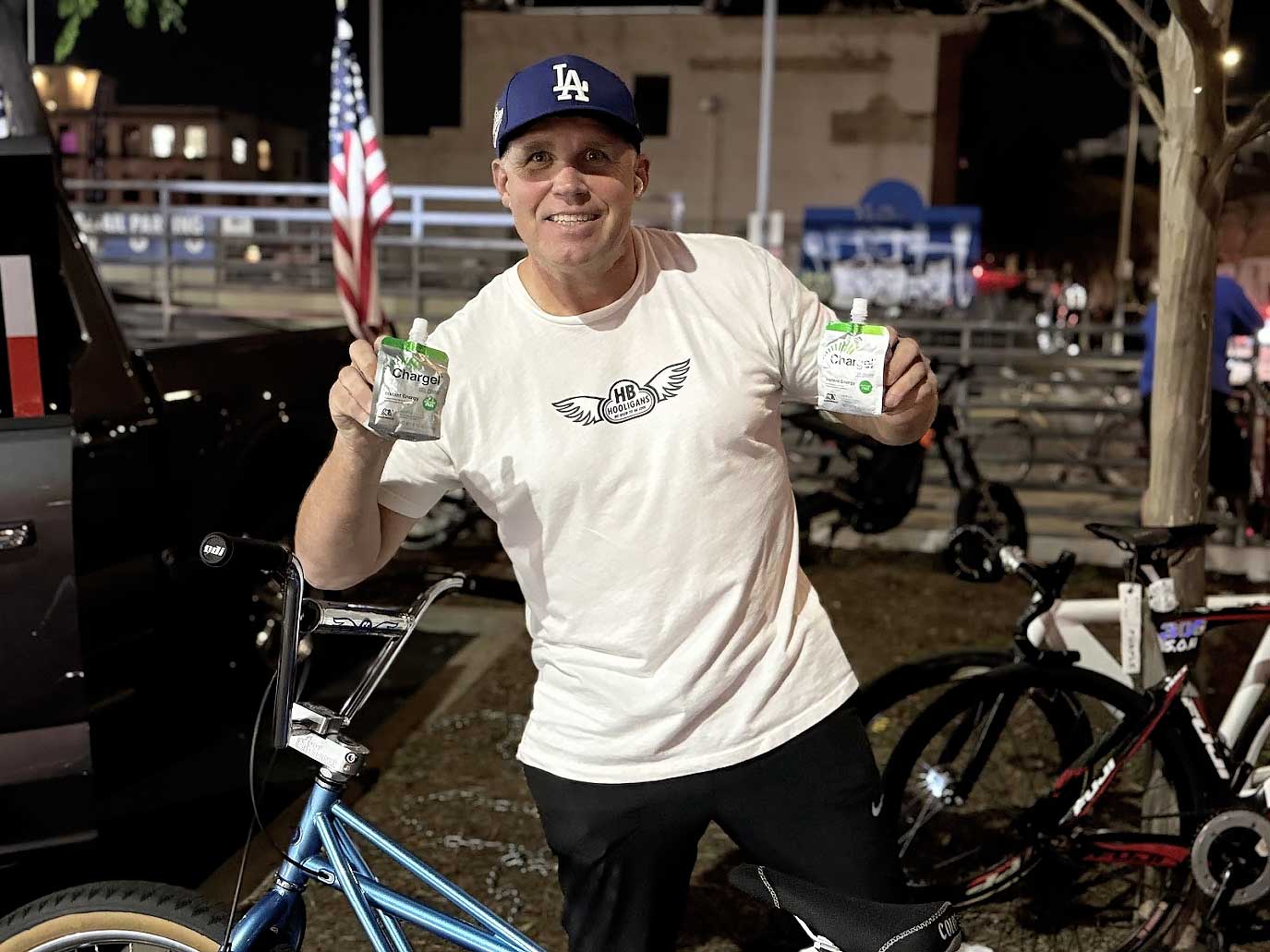
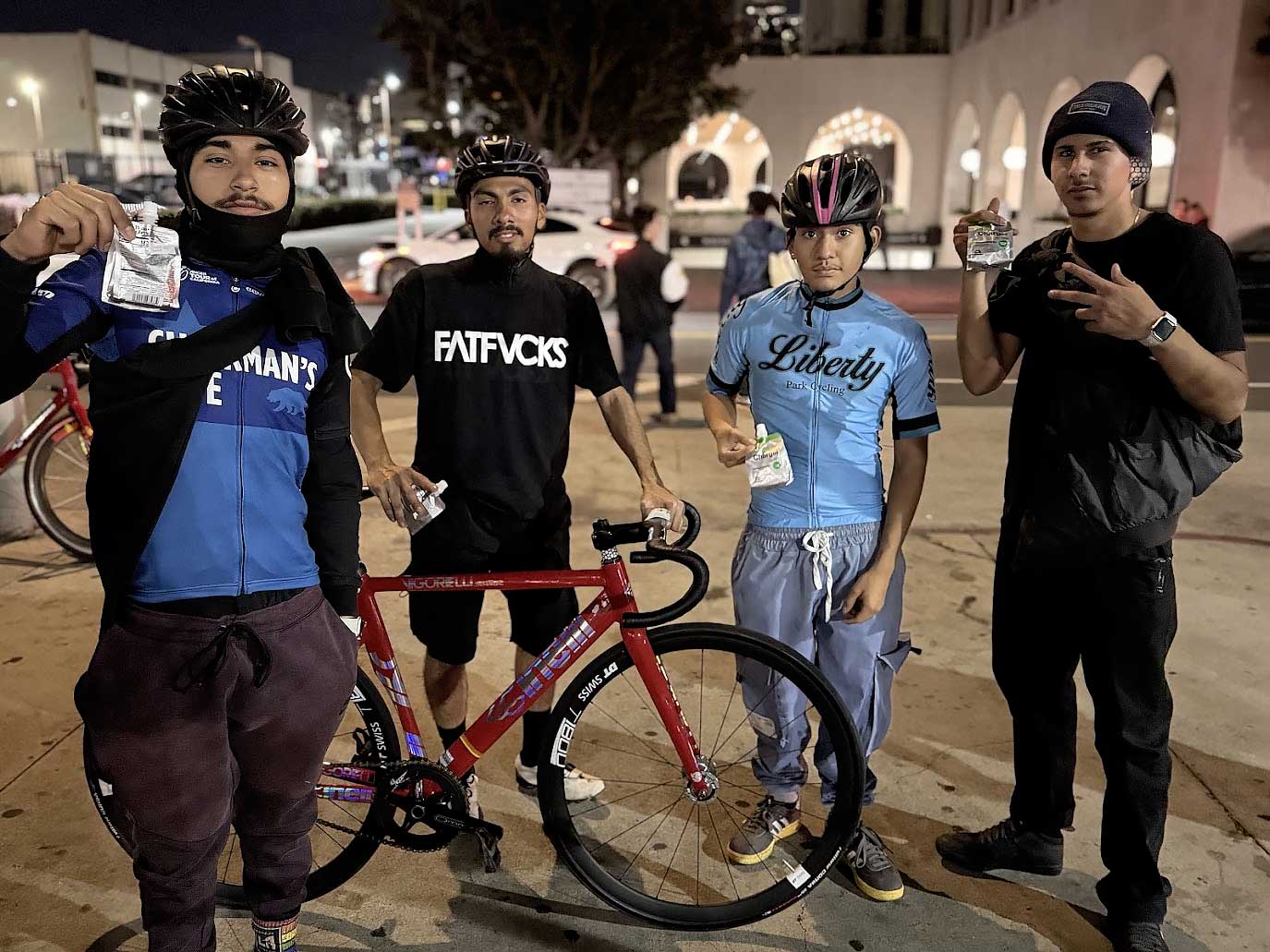
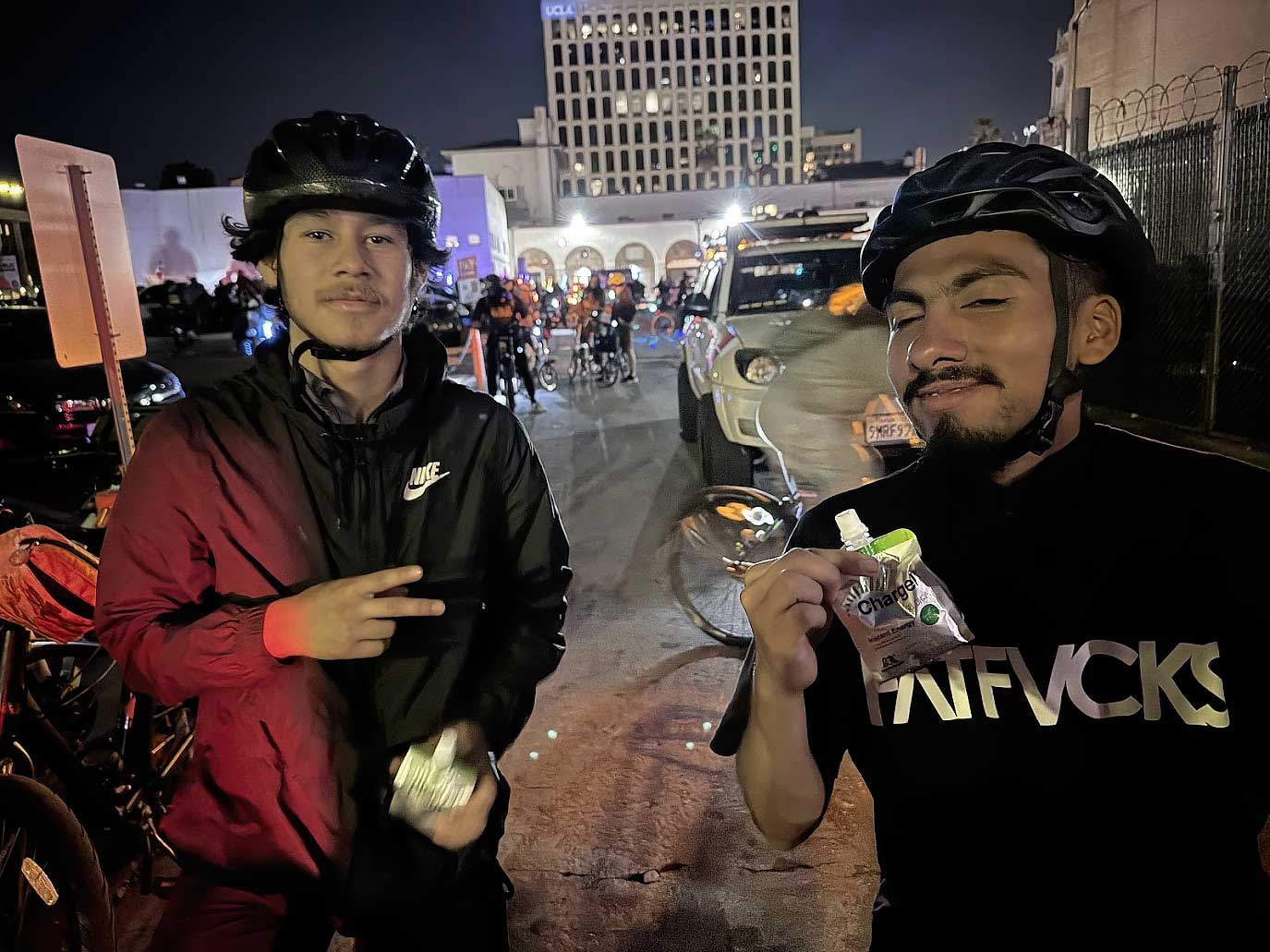
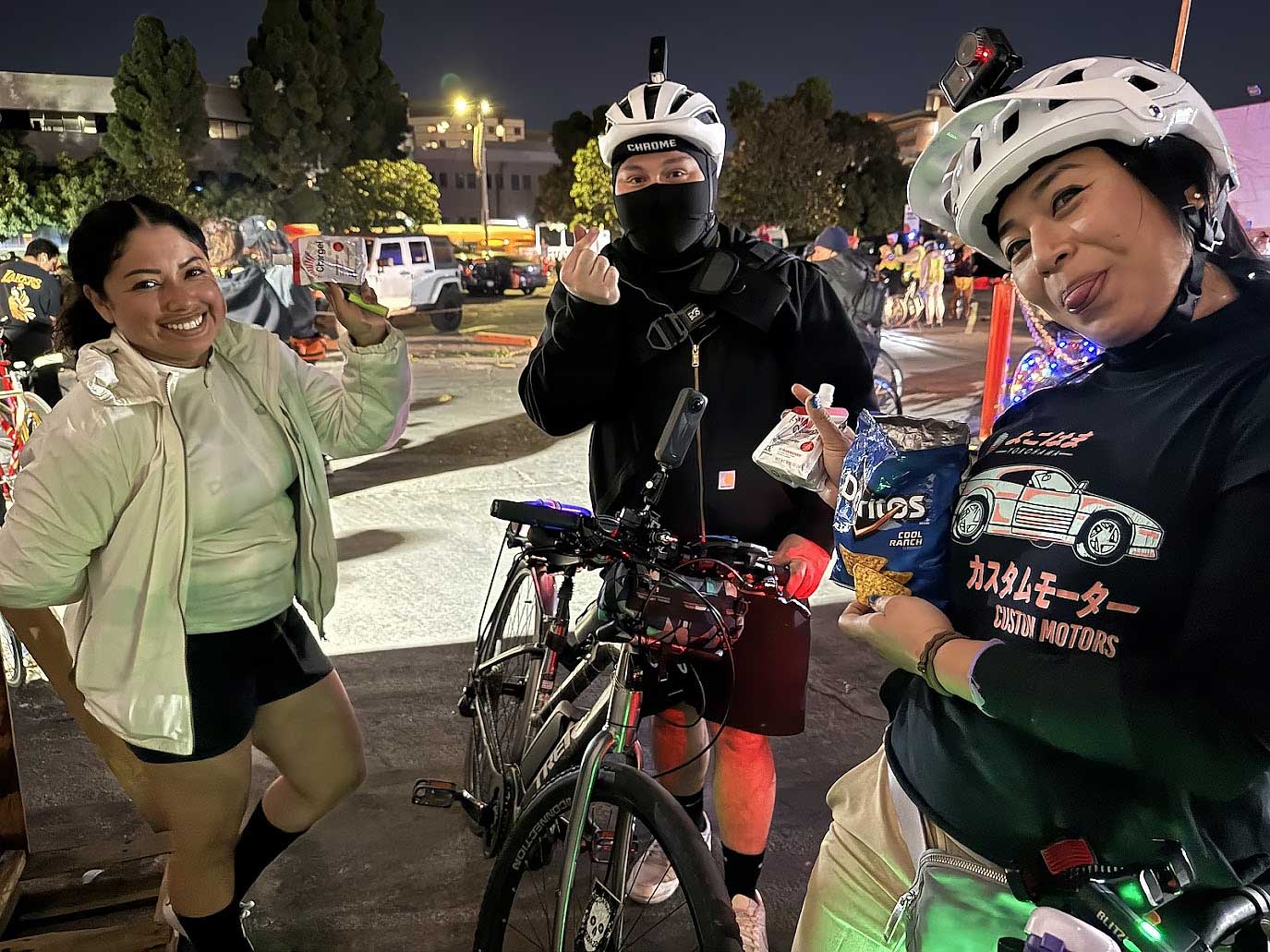
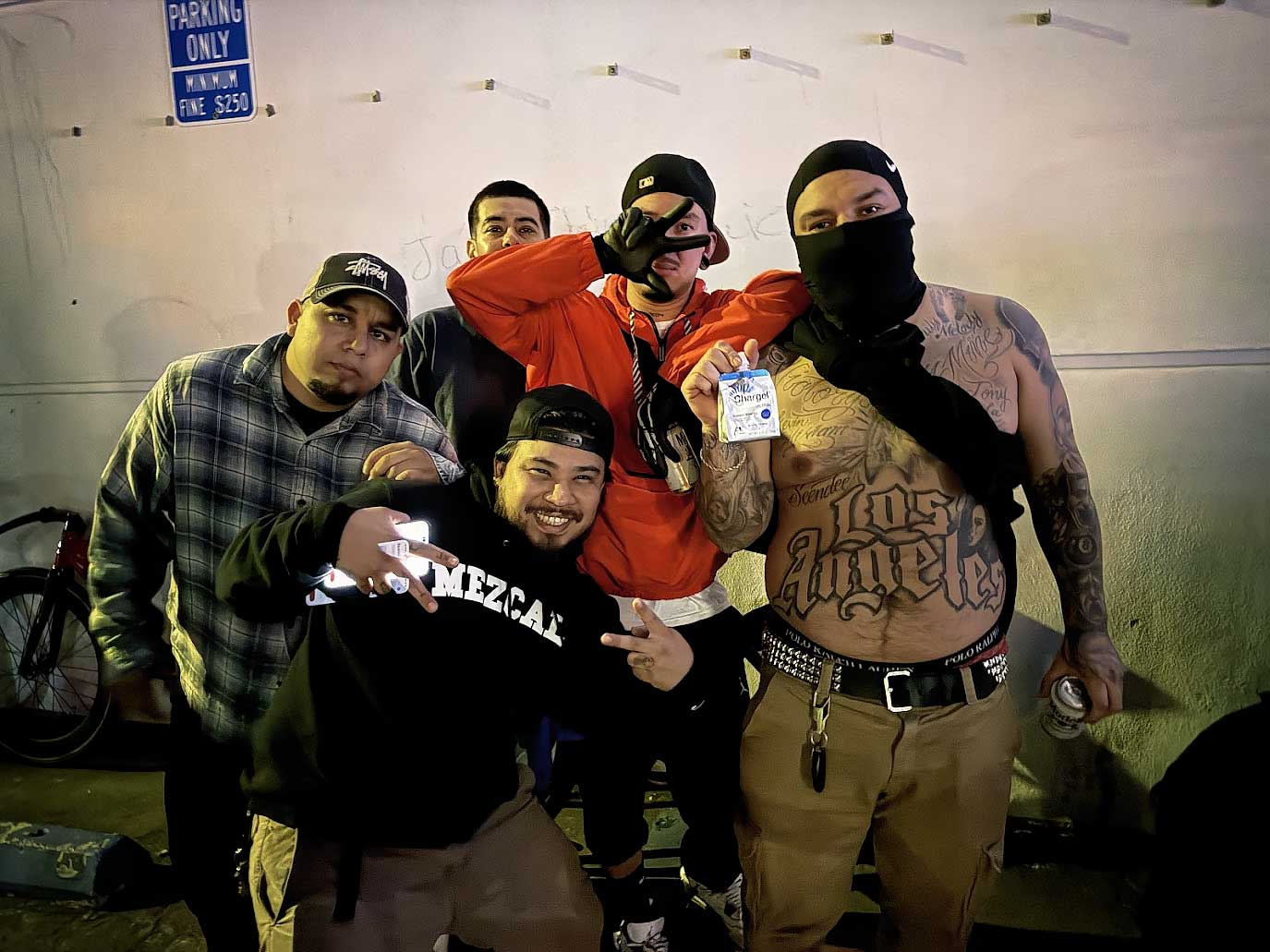
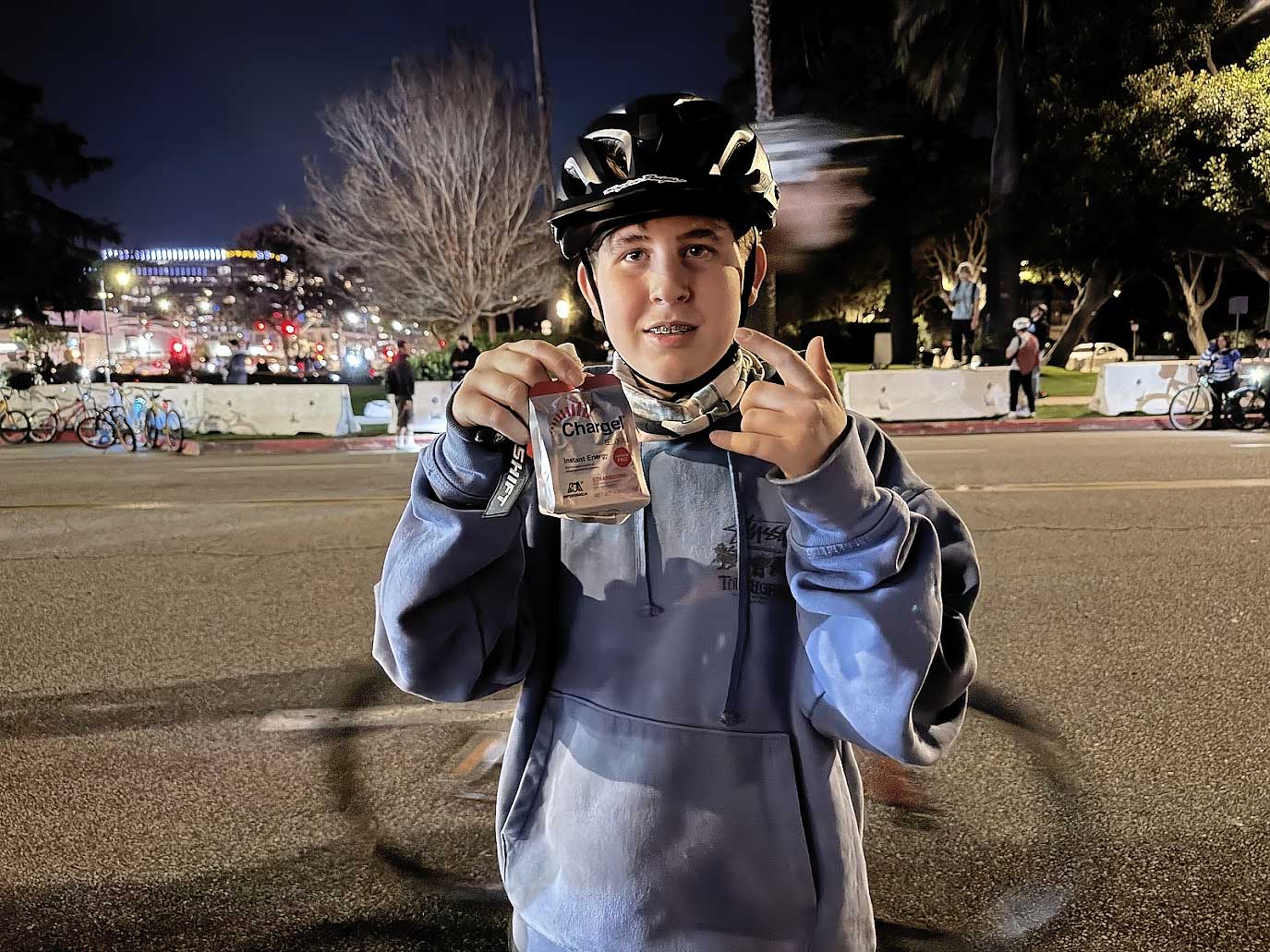
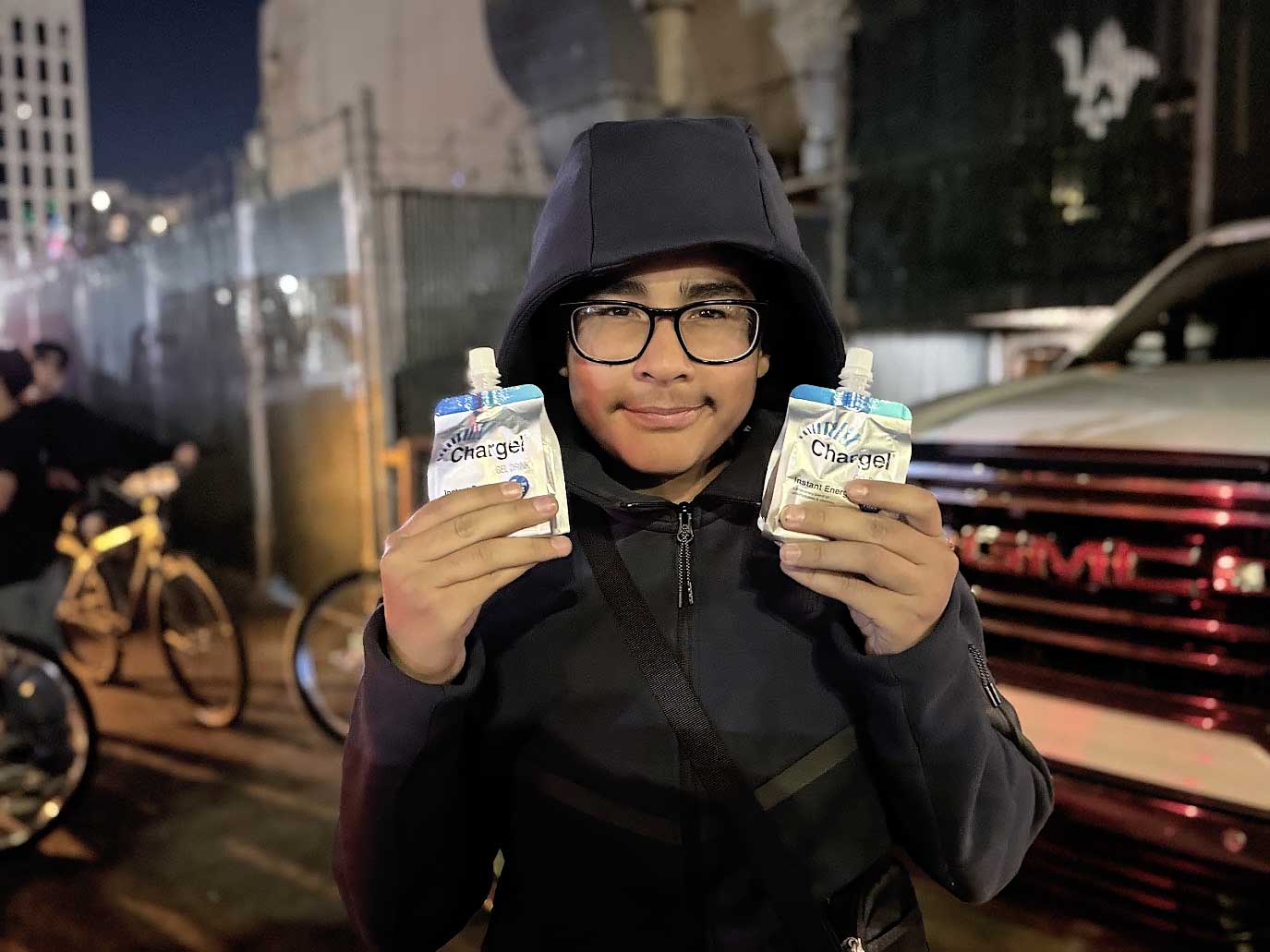
Chargel, one of our proud sponsors, was out in full force. From the very start of the ride at Western and Wilshire all the way to UCLA, Chargel was being sampled, enjoyed, and appreciated by riders who needed that extra boost. Smiles spread quickly as participants started sipping the Chargel energy gel packs—many were introduced to the fact that they’re caffeine‑free and loved that there was no crash afterward. Our VP, Jojo, moved through the crowd handing out the delicious gel packs to anyone interested or simply curious, talking with participants, checking in on riders, and celebrating everyone who pushed through this month’s challenging route. Riders were smiling, energized, and grateful—Chargel truly helped fueled the night. More than a few riders even asked Jojo where they could buy Chargel for themselves.
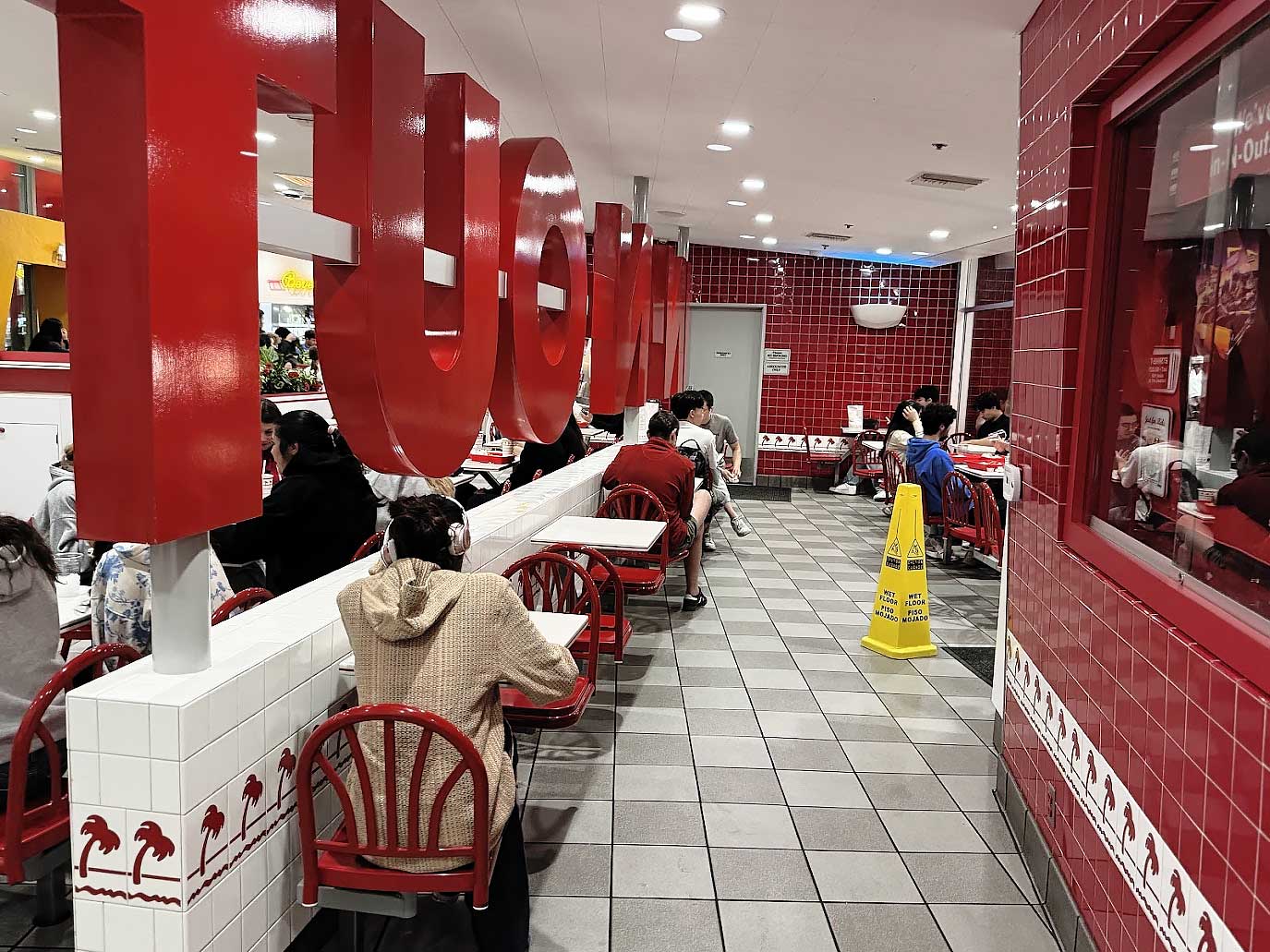
In‑N‑Out was a true epic delight for many. After the long ride and the climb into Westwood, countless riders had worked up a serious appetite, and the smell of fresh burgers and fries drifting through the air was irresistible. Riders lined up, grabbed food, and enjoyed a well‑earned moment of comfort before the final stretch of the night.
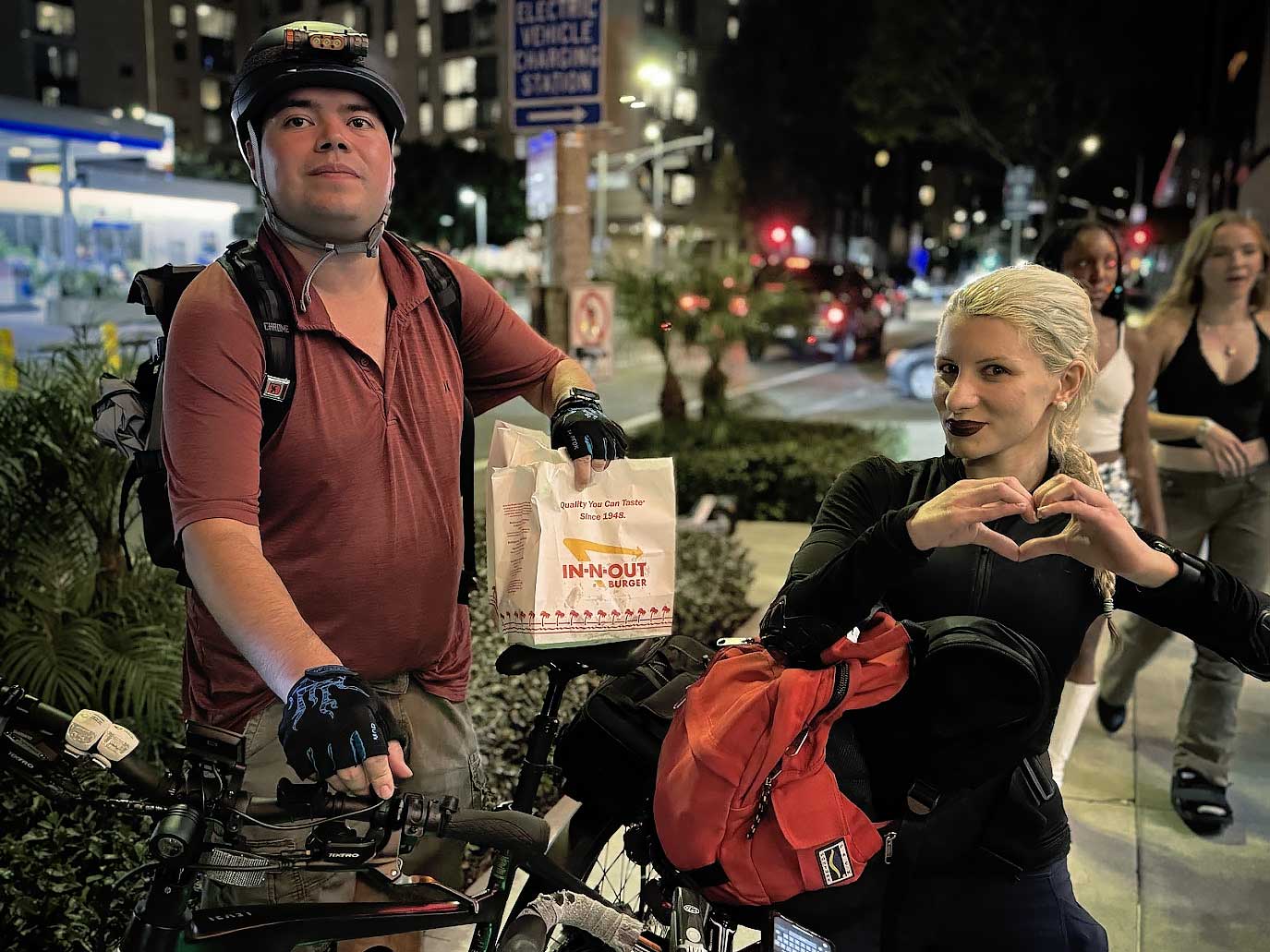
The location of the break was perfect. The UCLA campus stood directly in front of us, glowing under the night sky. To our right, the In‑N‑Out was alive with students and late‑night diners. Taco vendors lined the sidewalks, grills sizzling as riders grabbed snacks, water, and a moment to recharge. Nearby restaurants added to the energy, blending seamlessly with the mass of cyclists.
Despite the size of the gathering, everything felt calm, respectful, and organized. Riders spread out naturally, giving each other space while still sharing the collective joy of the moment. Some sat on curbs, others leaned against their bikes, and many simply stood in awe, taking in the sight of masses who had climbed, descended, and pushed together to reach this point.
Then UCLA Campus Police arrived. They greeted Lisa warmly, and their reaction said everything—they were amazed. Truly amazed. Seeing masses of riders filling the area with lights, music, and unity was a sight that even they weren’t fully prepared for, despite knowing we were coming. Their presence was supportive and collaborative, reinforcing the respect between LA Critical Mass and the campus community.
The atmosphere was electric, joyful, and deeply meaningful. It was a moment of pride for every rider, every volunteer, every organizer, and every partner who helped make this ride possible. A moment that reminded everyone why LA Critical Mass continues to grow, continues to inspire, and continues to move this city—one ride at a time.
The Final Stretch Back to HQ
Our main break gave us about an hour and a half—plenty of time for riders to recharge, refuel, hydrate, and gather themselves before the journey back. When it was time to roll out, the energy was calm but confident. We were heading back to our HQ.
We made our way passing through Westwood Village, a historic district that has shaped UCLA student life for nearly a century.
The masses rolled past the Hammer Museum, a major cultural institution representing LA’s artistic and intellectual heart.
We took our massive crowd down Westwood Blvd, past Wilshire, and back toward Santa Monica Blvd. The long, steep downhill from UCLA to Santa Monica Blvd was refreshing—a cool rush of air, a moment of effortless speed, and a well‑earned reward after the climb into Westwood.
But everyone knew what still lay ahead. There was one more climb waiting for us on the way back to Beverly Hills.
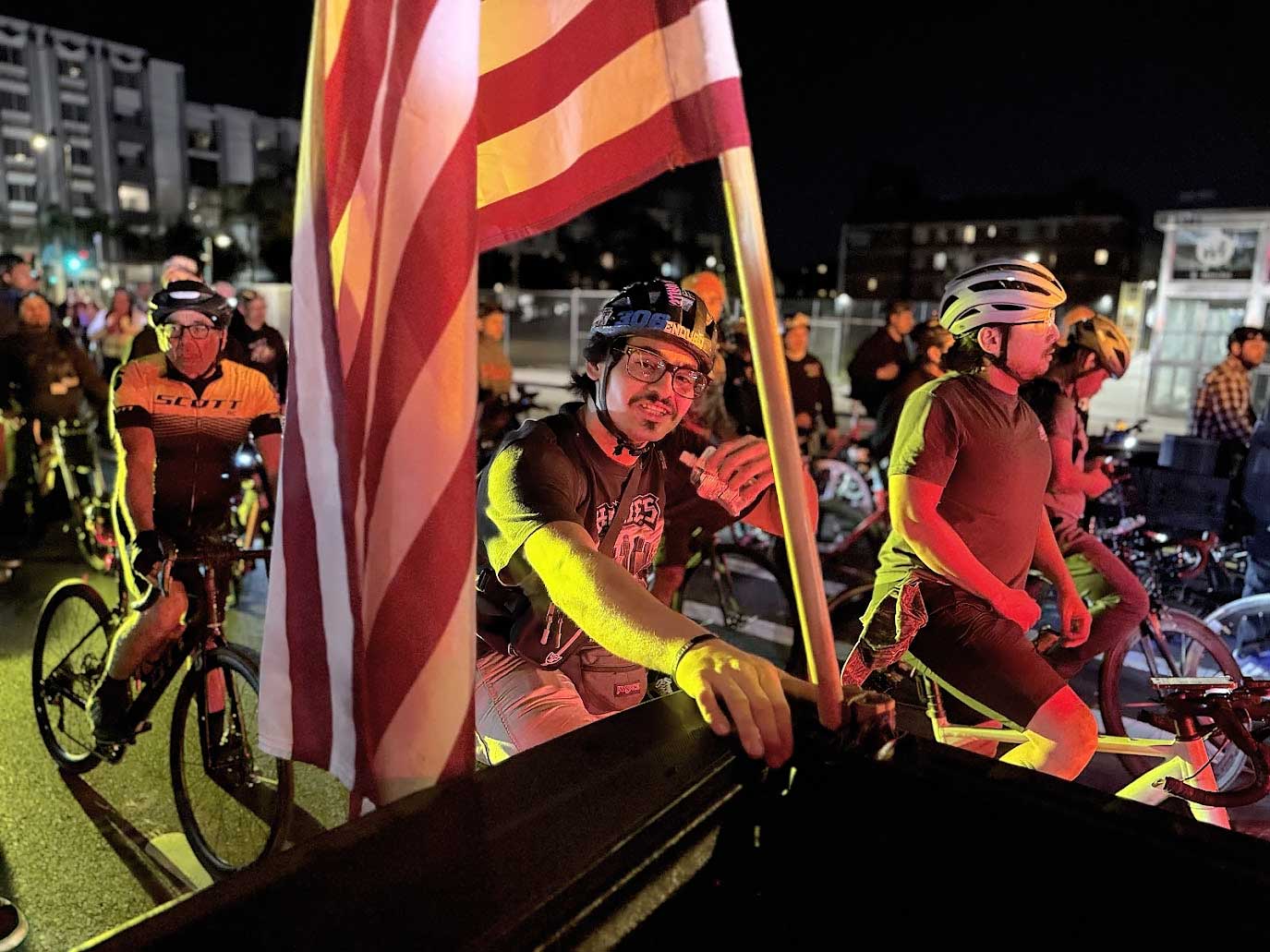
Even so, our riders were ready. Many had eaten, hydrated, rested, and recharged with Chargel. Spirits were high. Legs were strong again. And while the final climb was a challenge, it was one that had to be conquered—and it was.
Once we reached Wilshire Blvd, the hardest work was behind us. The road opened into a long, gradual downhill all the way back to HQ at Western and Wilshire. And this wasn’t just any stretch of road—Wilshire is one of the most historic boulevards in Los Angeles, and riding it at night felt like gliding through a living museum.
From there, the ride carried us past the Los Angeles County Museum of Art (LACMA), the largest art museum in the western United States. Just beyond it, the unmistakable glow of the Urban Lights—Chris Burden’s iconic forest of 202 restored vintage street lamps—lit up the night and drew cheers from riders as we passed. The La Brea Tar Pits came last, one of the world’s most famous Ice Age fossil sites and a powerful reminder that Los Angeles’ story began long before Hollywood.
Continuing down Wilshire, the mass passed the historic El Rey Theatre, a 1936 Art Deco landmark and beloved live music venue.
Next came the Wilshire Ebell Theatre, part of the historic Ebell women’s club founded in 1894, symbolizing women’s leadership and civic engagement.
Finally, we passed the grand Wilshire Boulevard Temple, one of the oldest Jewish congregations in the city, its Byzantine‑inspired dome representing deep cultural roots in Los Angeles.
By the time we approached Koreatown, the lights grew brighter, the streets livelier, and the energy unmistakable. Restaurants, cafés, and late‑night crowds lined the sidewalks as thousands of cyclists streamed through the heart of the city. Koreatown is one of the most vibrant, densely populated neighborhoods in the United States—a cultural powerhouse known for nightlife, food, music, and community resilience.
The final stretch toward Western and Wilshire felt like a victory lap—smooth, fast, and filled with pride.
The first ride of the year was coming to a close, and the feeling was unmistakable:
We had done something extraordinary together—and with the community’s support, we’ll continue doing it every last Friday of every month.
A Ride Sustained by Community Support
LA Critical Mass is 100% self‑supported.
There is no corporate funding.
No city budget.
No outside financial engine.
Every month, it takes real resources to run an event of this size—gas for support vehicles, safety equipment, volunteer needs, radios, lights, and the countless behind‑the‑scenes costs that keep the largest community bicycle ride in the USA moving safely through the city.
We are one of the largest monthly events in all of Los Angeles.
Every dollar donated matters.
It keeps the ride alive.
It keeps it safe.
It keeps it growing.
Thank you. Please click here to donate.


Related posts